Youth Emergency Preparedness
Take time to think about the daily routine and unique needs of the children in your care, their ages, health needs, comfort items, and what will help them feel safe. What can you do now to make sure your children are cared for and can recover from a disaster that disrupts normal life for days or even weeks?
Personal preparedness starts with knowing the hazards that threaten your community, whether that’s wildfire, flooding, severe winter weather, or earthquake, and understanding that our peninsula location can mean limited routes in and out, so roads may be blocked or outside emergency responders may take longer to reach you. That makes having supplies and a plan ready for your children even more important.
Preparedness also means having essential supplies on hand for your home, workplace, vehicle, and your child’s school or daycare. You likely already own most of what you need, the key is gathering it in one place. Your kit for infants, children, and youth should include, at a minimum:
- Water – 1 gallon per person, per day (for drinking, cooking, and washing); include extra for mixing formula if needed
- Food – Non-perishable, ready-to-eat foods your child will actually eat, including formula, baby food, or allergen-safe options. Check expiration dates regularly and rotate as your child grows
- Diapering & feeding supplies – Diapers, wipes, diaper rash cream, bottles, and feeding supplies sized for your child’s current age (remember to update as they grow)
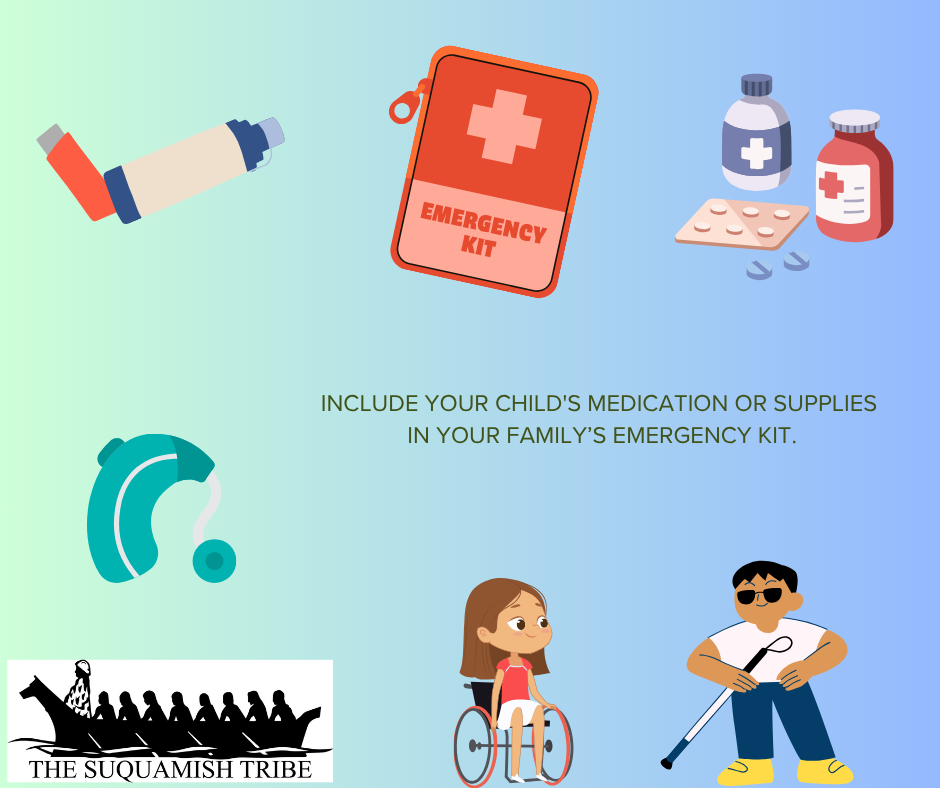
- First aid & medical supplies – Child-appropriate bandages, antiseptic wipes, gauze, children’s pain-relief medication, and any prescription medications, inhalers, or medical equipment your child needs
- Electronics – Hand-crank or battery-powered light sources, a portable radio for emergency alerts, extra batteries, and a backup way to charge phones or medical devices
- Clothing – At least one extra set of warm clothing, rain-proof outerwear, and sturdy shoes sized for your child, in case you need to walk long distances
- Comfort items – A favorite small toy, blanket, or book to help ease stress and fear during a scary or unfamiliar situation
- Important documents – Copies of your child’s tribal enrollment, ID or birth certificate, immunization records, insurance, and medical/emergency contact information, kept in a waterproof or portable container
- Family communication plan – A way to reconnect with your child if you’re separated during an emergency (especially if they’re at school or daycare), including an agreed-upon meeting place and a trusted emergency contact your child knows