
New BIMA exhibit showcases Indigenous craft and Suquamish style
A new exhibition at the Bainbridge Island Museum of Art showcases Suquamish artists alongside Indigenous makers from across the Salish Sea region, bringing together weaving, jewelry, clothing, and other works that connect generations of cultural knowledge with contemporary creativity.
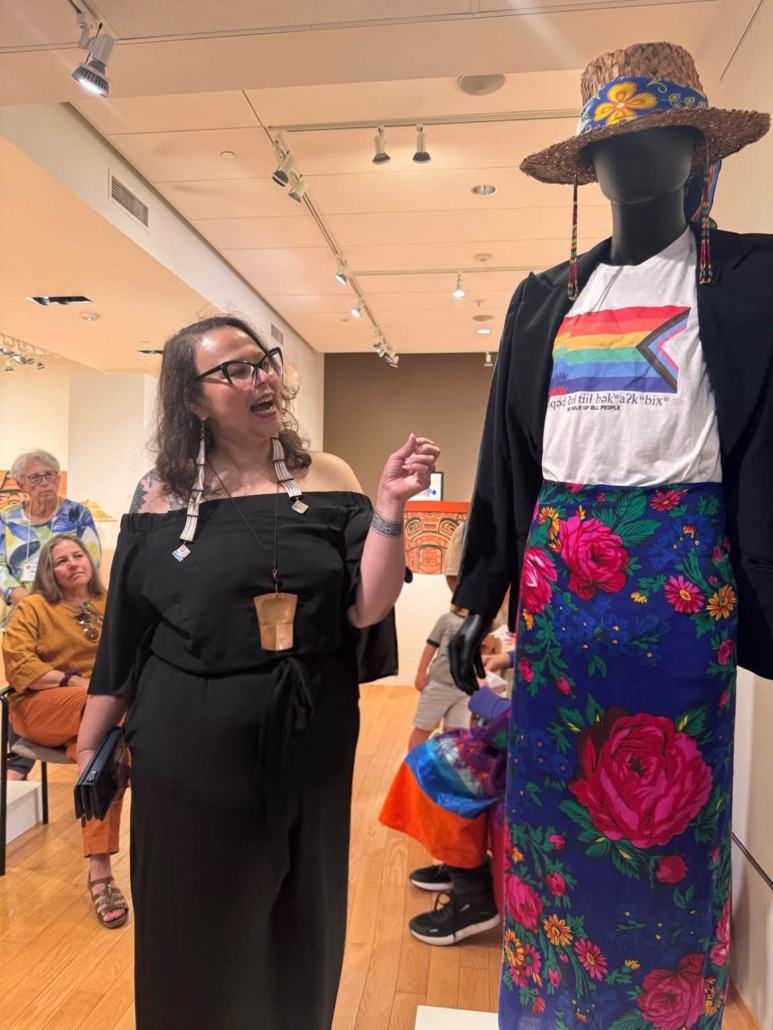
On view through Nov. 1, “Indigenous Craft” features more than 20 artists, including Suquamish artists Barbara Lawrence, Betty Pasco, and Denita and Joey Holmes. Suquamish Foundation Director Robin Little Wing Sigo co-curated the exhibition, which includes ceremonial regalia and modern fashion alongside wood carving, ceramics, glass, and textiles.
To celebrate the exhibit, the museum recently hosted a special daylong event dubbed “The Abundance of Salalberries pədt’aqa: Celebrating the Suquamish Tribe,” featuring traditional song and dance, curator-led tours, weaving activities, craft demonstrations, and screenings of “Sovereign Style.”
The stories behind what people make — and how they choose to wear it — took center stage during a panel discussion with Sigo and Suquamish tribal artists Vincent Chargualaf and Chelsea Jones. The panelists explored how clothing and jewelry express identity, carry family connections, and help shape the future of Indigenous culture.
For Jones, a paralegal, that includes bringing Suquamish style into the office. Jewelry, scarves, and other details allow her to express who she is within the expectations of a professional wardrobe. For the panel, she wore beaded earrings as decorative accents on her blazer, adapting an idea she had seen online.
Her grandmother’s influence remains especially strong. Jones inherited jewelry and clothing from her grandmother and now wears those pieces alongside her own. She also carries forward the sewing and beading skills her grandmother taught her, making ribbon skirts for her mother and helping prepare her mother’s graduation regalia.
Chargualaf ’s interest in documenting Indigenous style led to a photography project during Canoe Journey. They began asking people to pose with their earrings, drawing on relationships with family, friends, and youth they had worked with. As others saw the photographs being taken, more wanted to participate.
About 50 pairs of earrings later, Chargualaf had assembled a collection of portraits showing the people, artistry, and individual choices behind the jewelry.
Chargualaf described photography as a kind of time machine, preserving a moment along with the memories surrounding it.
“You’ll know exactly what was going on in frame, out of frame, around them, what the sounds were, what the smells were,” they said.
Chargualaf ’s photographs also document an evolving fashion culture, where artists introduce new designs and wearers give them their own meaning.
Sigo challenged the idea that fashion is a minor concern.
“Fashion gets put in this frivolous place,” she said. For Indigenous people, she explained, those choices can connect family history, cultural identity, and hopes for future generations. Her interest in Indigenous futurism includes making room for imagination, joy, and possibilities beyond the demands of survival.
The discussion also questioned distinctions between art and craft. Sigo recalled asking people to contribute ribbon shirts to fashion shows, only to hear that their work did not belong because they had simply sewn something for someone to wear.
She saw creativity and skill deserving of recognition. The panel encouraged visitors to consider the time, labor, and cultural knowledge behind handmade work — and to support Indigenous artists by buying directly from them and paying their asking prices.
For Chargualaf, the connections behind an outfit are part of its meaning: the artist who made a piece, the relative who selected it, and the person who decides how to wear it.
The exhibition offers visitors a chance to explore those connections for themselves. “Indigenous Craft” continues through Nov. 1 at the Bainbridge Island Museum of Art, 550 Winslow Way E. The museum is open daily from 10am to 5pm. Admission is free.

