
UW teaching students learn from Suquamish educators
A good canoe skipper knows how to motivate their pullers. A great one knows it can take perseverance, humor, and sometimes even an offer of self-sacrifice.
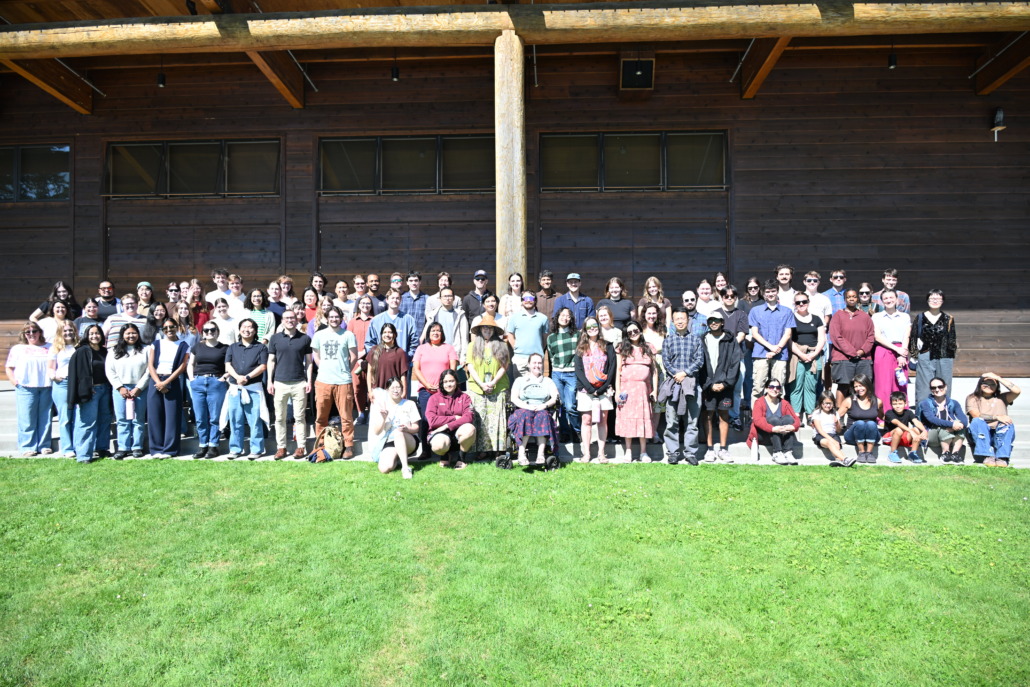
Western Washington University Professor and Suquamish Canoe Skipper Nigel Lawrence offered that lesson to 70 aspiring teachers gathered inside the Chief Kitsap Academy Commons Aug. 11.
The students are part of the University of Washington’s Secondary Teacher Education Program and came to Suquamish as part of an Indigenous-led outing supporting their coursework in Indigenous Perspectives and Language & Literacy Revitalization. Through a partnership dating back to 2016, UW STEP students visit CKA and the Suquamish community to learn directly from tribal students, teachers, and cultural educators as they prepare to lead classrooms of their own.
For Lawrence, the lesson began with a canoe journey when his pullers were running out of energy.
“Have you all watched the movie where the mountain climber gets trapped in a canyon and he has to cut off his own arm to survive?” Lawrence asked, referencing 127 Hours, based on the true story of mountaineer Aron Ralston. “I told my pullers that if that guy could survive, they would too and — bonus — get to keep both arms,” Lawrence said with a laugh. “I thought that would motivate them!”
It worked, but only briefly.
Lawrence tried reminding the pullers that their ancestors had persevered to make their journey possible. When that boost also faded, he made them an offer.
“OK, if you all pull in unison 500 times, I’ll jump in the water.”
They pulled. They counted. They passed 500, then 1,000. They switched sides and did it again. Lawrence kept his promise, eventually jumping into the water four times.
The story carried a lesson for the future educators.
“Teachers, find what motivates your students,” Lawrence told them. “It might be different for every single one of them.”
Lawrence, who teaches Since Time Immemorial curriculum and focuses on culture and diversity in education, was one of several Suquamish educators, students, and community members who spent the day sharing perspectives with the UW cohort.
“Our goal is that every single teacher understands tribal sovereignty and our responsibility to uphold it,” said UW Indigenous Perspectives Professor Kwulasulwut Emma Elliott.
CKA Principal Lucy Dafoe said UW STEP has brought future educators to Suquamish in collaboration with CKA since 2016. Beyond providing future teachers firsthand experience with tribal education, the partnership can also introduce potential educators to CKA.
“Sometimes it even ends up being an avenue for recruitment of our teachers,” Dafoe said.
The UW STEP students received Lushootseed language lessons led by CKA teacher Brandy Boure and recent CKA graduate Elilai Abraham, Barbara Lawrence’s granddaughter. They also visited the Veterans Memorial, House of Awakened Culture, and Charles Lawrence Memorial Pole as part of a community tour led by Suquamish Elder and Since Time Immemorial Curriculum Specialist Barbara Lawrence — Nigel Lawrence’s mother.
At the memorial pole, Barbara Lawrence shared the story of her father, Charles Lawrence, giving the future teachers another family perspective on the themes of perseverance and humor her son had discussed earlier.
She told the group that her father and his brother returned from boarding school so malnourished that the military initially wouldn’t accept them.
“They were too scrawny when they came home from boarding school,” she said, pointing toward the nearby beach. “They went right down there and dug and ate clams until they had put on enough weight that the Army would take them.”
Charles Lawrence served in World War II and was wounded during the D-Day invasion on Omaha Beach. He subsequently contracted tuberculosis and spent time in a hospital, where he met the woman who would become his wife — a “redheaded, freckle-faced Norwegian woman” staying in another wing.
The two passed notes through library books and taught themselves sign language to communicate, Barbara Lawrence said. Eventually, her father finger spelled a marriage proposal — only to misspell it.
“My mom signed back, ‘Did you say marry me?’” she said. “And he told everyone who would listen that she had asked him to marry her.”
The lessons continued that afternoon when about a dozen CKA students and teachers came in during summer break for a question-and-answer panel with the future educators.
For the CKA students, culturally responsive teaching wasn’t an abstract educational concept. It was part of their own experience in the classroom.
“Going to CKA isn’t like public schools,” CKA Senior Corrina Sigo said. “Teachers here are open-minded. We get to do things that matter inour community.”
Sigo pointed to programs such as Ocean-to-Table and field trips to other reservations as some of her favorite parts of attending CKA.
The day ended with one more Lawrence family perspective.
Nigel Lawrence’s son, CKA Senior Dio Lawrence, offered the future teachers a piece of advice from the student side of the classroom.
“Uplift your students however you can,” Dio Lawrence said. “Do that and it will leave a lasting impact.”

