
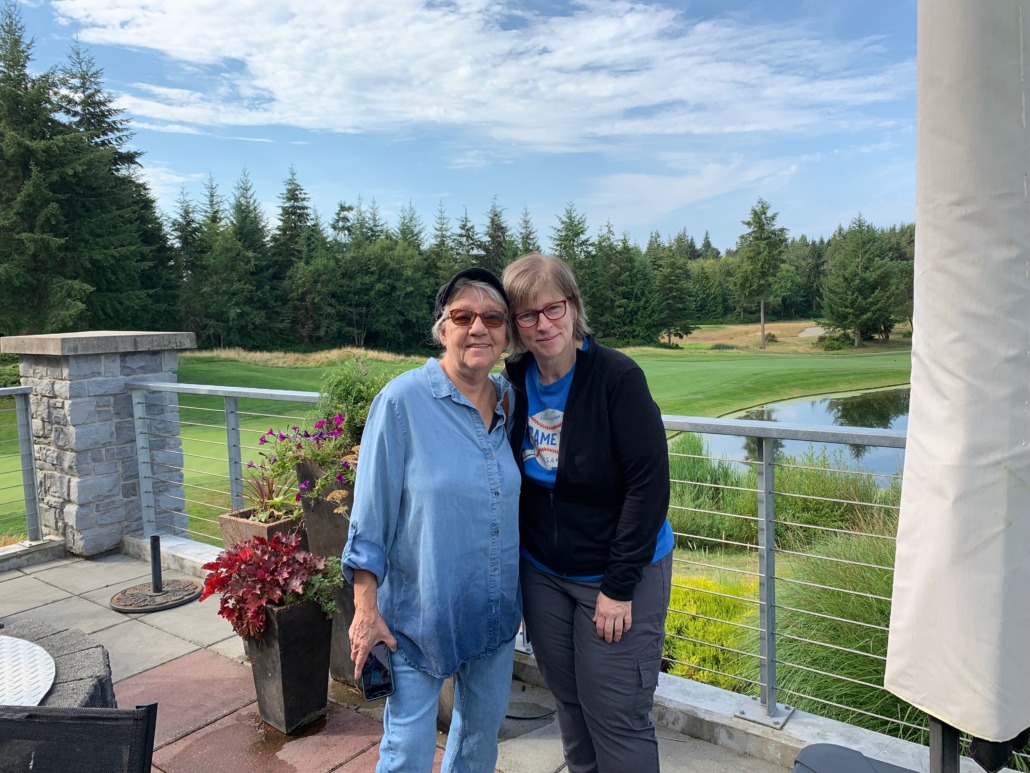
Honoring a legacy
Suquamish tribal member Patty Vollenweider was working at medical clinic in Northern California when she learned that a client had died while sleeping in a nearby public park. His Social Security benefits had been mismanaged by his payee, the person who was supposed to be helping pay his bills. That mismanagement left the man without the resources he needed to survive.
That was in the early 1990s and the moment stayed with Vollenweider. And it clarified a calling.
Not long after, she founded what is now known as Community Engaged Payee Support, or CEPS, built on a simple idea: people deserve to access their own money with dignity, safety, and trust.
What began as one woman’s response to injustice has grown into a non-profit organization that now serves thousands of people each month across the Sacramento area, including elders, people with disabilities, and veterans.
CEPS aids individuals who have difficulty managing their day-to-day financial affairs. Services are designed to meet each client’s individual money management needs, while serving as their representative payee. This includes establishing and maintaining a monthly budget, paying monthly bills, creating savings goals, organization and keeping track of financial records, negotiating with creditors, and protecting them from financial fraud, abuse, or exploitation.
Managing millions of dollars in payee funds and donations, CEPS helps clients maintain stability while also connecting them to housing, behavioral health services, and recovery support.
But for Vollenweider, the work was never just about building better support systems. It was always grounded in finding better ways to care for the people who need them.
Radical simplicity
“Her work was radical in its simplicity,” says her daughter Jasmine Vollenweider. “Meet people where they are, love them as they are, and believe in who they could become.”
That philosophy was shaped by lived experience, a single mother raising two daughters while relying on public benefits. She also carried decades of sobriety, with experiences that grounded her approach in empathy rather than judgment.
“She knew firsthand how fragile stability can be,” Jasmine says.
Vollenweider also carried Suquamish cultural teachings that emphasized community, connection, and responsibility to others. “She was a proud Suquamish Elder, carrying forward the wisdom and responsibility of a lineage rooted in the teachings of Chief Seattle. Her Indigenous identity was not something she spoke about loudly — but it lived quietly and powerfully in how she showed up in the world. She believed deeply in community, in interconnectedness, and in honoring each person’s spirit.”
That belief guided how she built CEPS. The organization expanded beyond financial management to include housing support, mental health advocacy, and recovery services, becoming a trusted resource for people navigating some of life’s hardest moments.
It also shaped how she treated people in everyday encounters.
Jasmine recalls a moment when her mother stopped to speak with a veteran holding a sign on an offramp. Simply listening to his story led to a connection with VA services. The man eventually found stable housing, remarried, and rebuilt his life.
“She reminded all of us — staff, clients, and partners — that focusing on the good is not naïve; it’s necessary,” says Jasmine.
A lasting legacy
Vollenweider passed away Dec. 6, 2025, at the age of 71.
In the months since, her daughter has stepped forward to carry on the work her mother began more than 30 years ago.
“I’ve had the privilege of learning from the very best,” says Jasmine. “Since the inception of CEPS, I’ve walked beside my mother—not just as her daughter, but as her student.”
Now helping to lead the non-profit, she continues the work grounded in the same values her mother instilled — caring for both clients and staff, removing barriers where possible, and staying focused on doing what is right.
Through CEPS, Patty Vollenweider’s work continues.
“Her impact will ripple outward for generations,” says Jasmine. “In every door opened to stability, every moment of dignity restored, every person who walks through our doors and finds not judgment, but hope.”

