
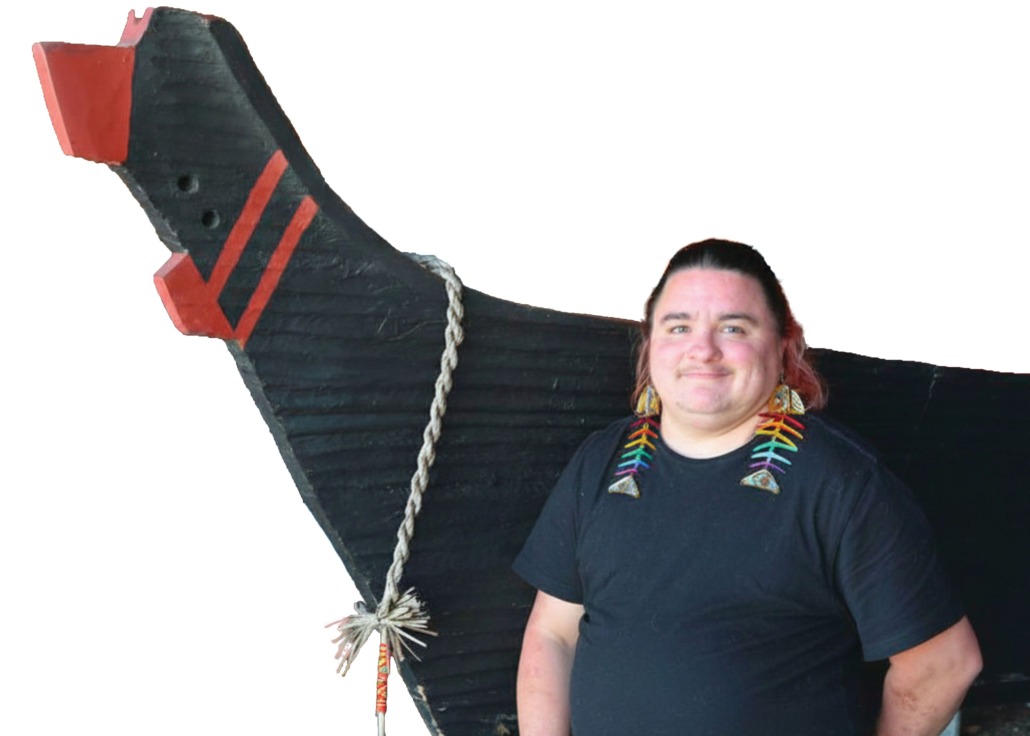
From Canoe Kid to Cultural Coordinator Kyles Gemmell Helps Carry the Journey Forward
There were the freezing cold showers. Itchy regalia. Pouring rain. Middle-of-the-night wake-ups for protocol. And then there were the lice.
When Suquamish tribal member Kyles Gemmell participated in their first Tribal Canoe Journey at age nine as a member of the tribe’s song and dance group, the experience was memorable for all the wrong reasons.
“They were hoping it was so bad that I had forgotten,” Gemmell said. “Nope! I don’t know how you could forget that?”
Yet more than two decades later, Gemmell is helping coordinate the tribe’s participation in this year’s Canoe Journey as the Suquamish Tribe’s new Cultural Activities Coordinator.
Looking back, those inconveniences were a small price to pay for an experience that would shape Gemmell’s life.
Over the years, Gemmell has participated in nine Canoe Journeys, learning nearly every aspect of the event along the way. Today, they are helping oversee everything from hosting arriving canoe families in Suquamish to preparing and provisioning pullers and support crew traveling on this year’s journey to Nisqually.
The details are endless. The logistics are complex. Gemmell and the team from the Cultural Resources Department have to-do lists longer than the canoes themselves.
But Gemmell feels prepared for the challenge.
Cultural reawakening
Tribal Canoe Journey traces its roots to the 1989 “Paddle to Seattle” when tribal canoe families traveled from Suquamish to Seattle as part of the Washington Centennial celebration. From that first journey, the now annual event has grown in scope and scale, celebrating Coast Salish cultures throughout the region.
“Tribal Canoe Journeys have been a means to bring back a lot of different aspects of tribal culture,” Gemmell said.
By the late 1980s, many tribal communities had stopped regularly carving canoes, making paddles, or weaving cedar bark hats. Canoe Journey helped revitalize those practices, along with songs, dances, regalia, and other cultural traditions.
“Tribes not only had to relearn things, but they also began improving them. For example, the cedar regalia I wore when I was younger was so itchy,” Gemmell said. “Now we know what to do to make it more comfortable.”
Rediscovering and revitalizing traditional practices have also provided insight into the knowledge and experiences of ancestors.
Gemmell recalled overhearing a canoe skipper connecting the dots from the past to the present while discussing cedar hats.
“He said a cedar hat is perfect to wear on a canoe because it blocks the sun and provides a barrier to the rain,” Gemmell said. “He then said, ‘Oh! This is why our ancestors made hats this way.’”
Around the corner
Each year, a different tribe hosts the final landing and protocol ceremonies. Canoe families depart from communities across the region, joining together as they travel toward the host tribe.
Last year, for example, Tribal Canoe Journey landed at the Lower Elwha Klallam Tribe near Port Angeles. Canoe families from Suquamish spent four days getting there. For Skwah First Nation, pulling from British Columbia, it was an 11-day journey to the final landing.
However much time you spend, Gemmell said there is nothing quite like the healing that comes from being out on the water.
“When you’re out there, the focus is on working together to get to the next spot,” they said.
“Nothing else matters except for that moment.”
And if pullers ask how much farther?
“The skippers will never tell you,” Gemmell said. “They will just say, ‘Around the corner,’ but they never say which corner.”
It’s not a race or a competition. Instead, Gemmell said, it’s about the journey and helping everyone arrive together.
From puller to planner
Gemmell began pulling in canoes as a teenager, and it wasn’t long before they were assigned to seat one, the critical position that sets the pace for all the pullers.
“I think I was put in that seat because I didn’t give up, even when I was tired,” Gemmell said.
One year during song and dance practice, Suquamish Tribal Elder Peg Deam gave Gemmell their Lushootseed name, čusəd, meaning star. Deam chose the name because Gemmell quickly picked up songs, dances, and traditional Lushootseed introductions and was always ready to help at community gatherings.
Later this month, as canoe families arrive and depart from Suquamish waters, Gemmell will once again be called on to shine — helping ensure a new generation creates memories and connections of their own.
“The experience is about connecting with others and healing in whatever form you need,” Gemmell said. “That is Tribal Canoe Journey.”

