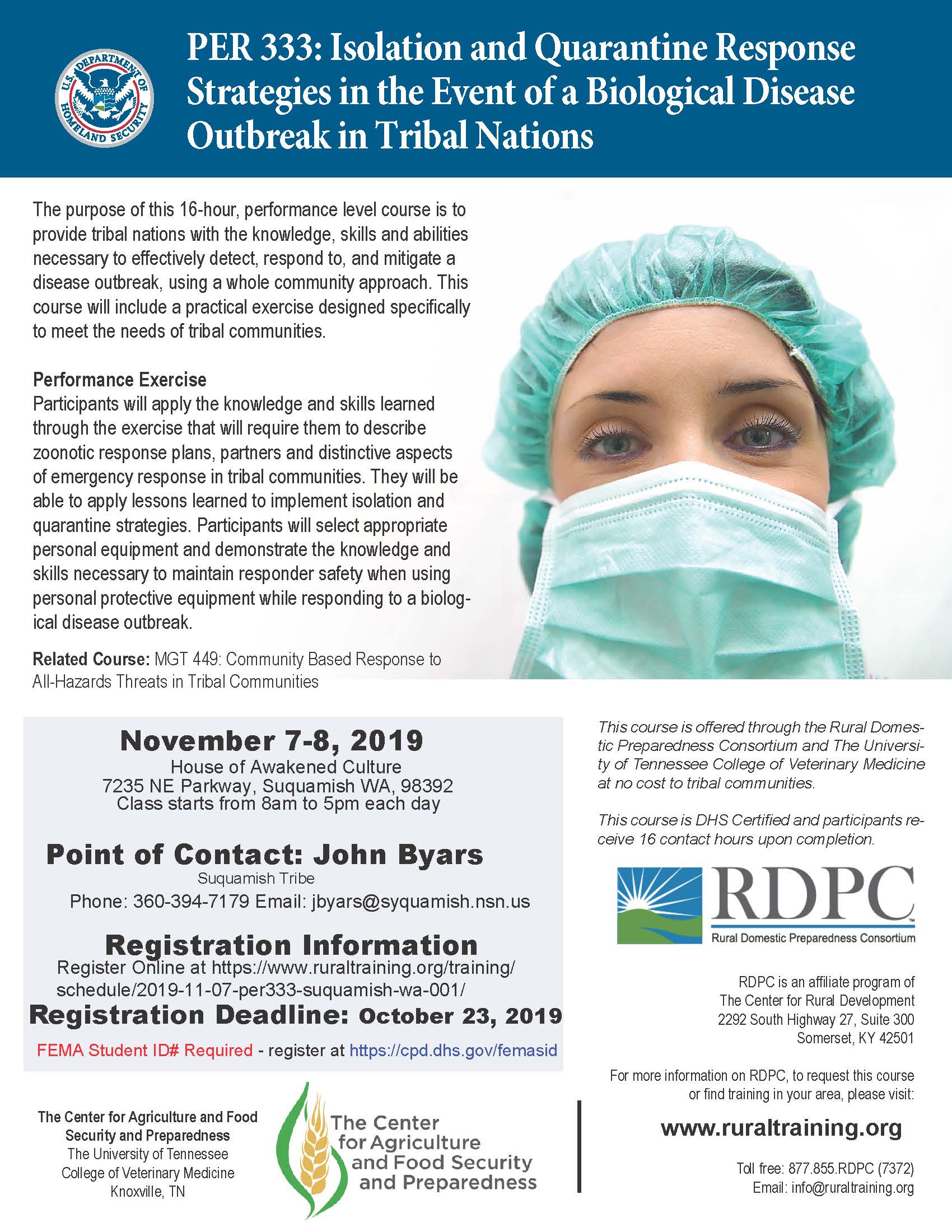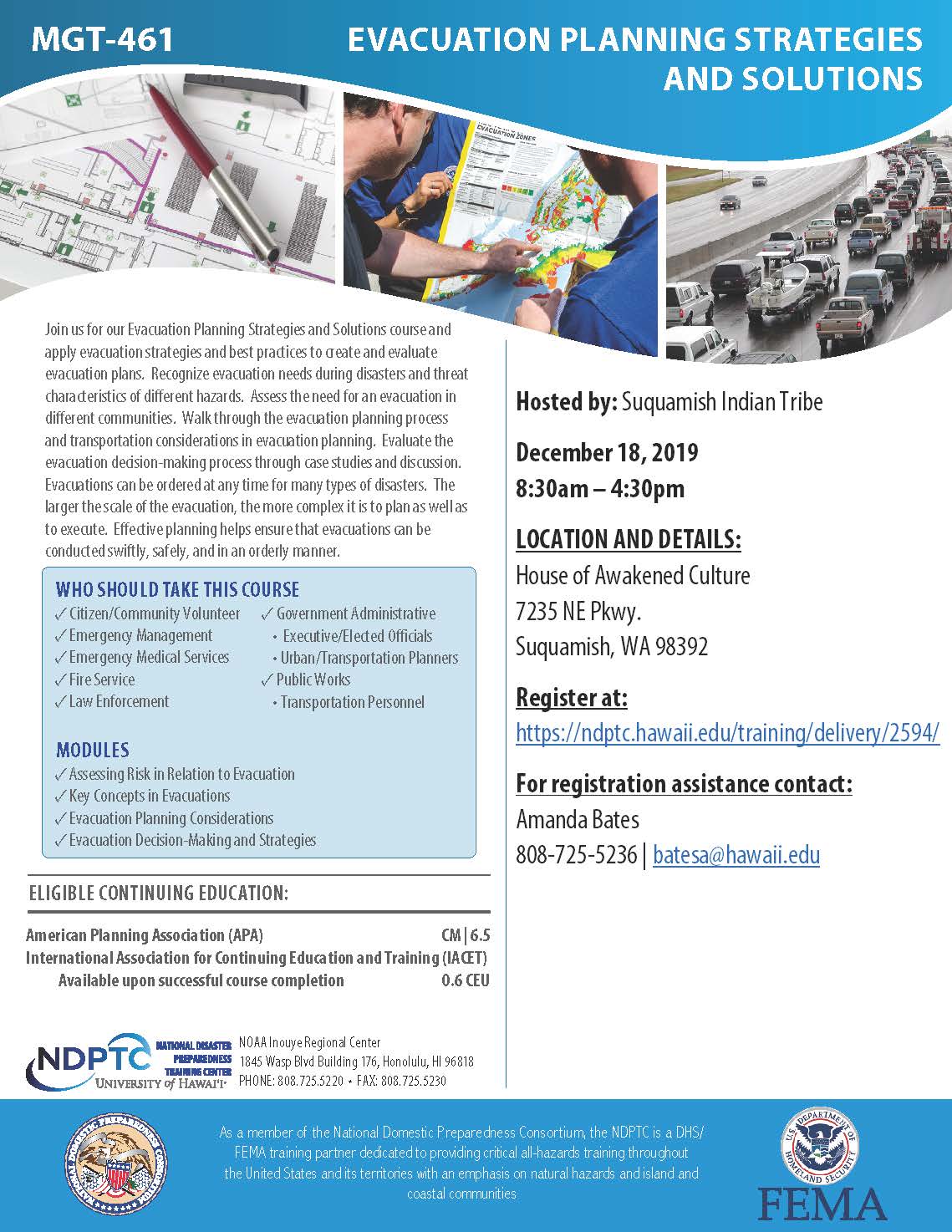

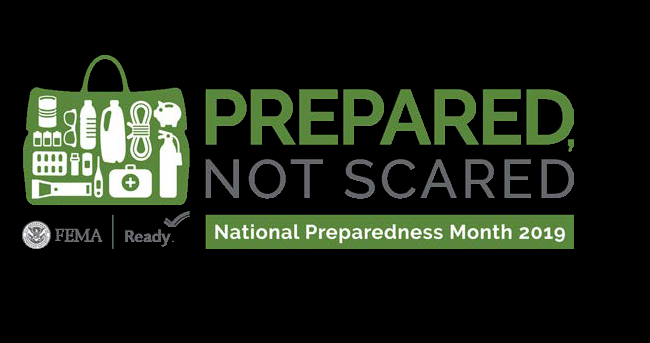
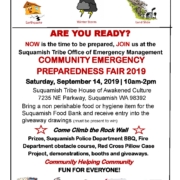
Did you know that #NatlPrep Month is a result of increased emergency preparedness in the wake of the 9/11 attacks that occurred 18 years ago today?
Since 2004, September has been declared National Preparedness Month and is sponsored by the Federal Emergency Management Agency (FEMA).
The focus is on personal and community preparedness.
This year’s theme is #PreparedNotScared and a wide variety of resources are available at www.ready.gov/plan.
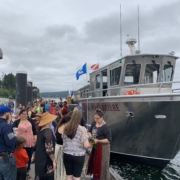
Members of the Suquamish Tribe welcomed the newest member of the Suquamish Seafood Enterprises fleet in a dockside dedication ceremony Thursday morning.
The F/V Carriere will serve as the flagship for the Tribe’s geoduck harvesting operations.
“This is a really big great day, not just for our company and our divers, but for the Tribe and the community,” said Suquamish Seafood’s general manager Tony Forsman, opening up the dedication ceremony. “We have members who aren’t even born yet who will be using this boat. This is what takes us into the next generation in a safe, efficient and good way.”
The 49-foot aluminum dive boat is powered by twin diesel engines and is equipped with a suite of compressors that pump air to two divers at a time. Built by Lee Shore Boats in Port Angeles, the nearly $1 million vessel was paid for in part through a grant by the Native American Agricultural Fund.
The ship is named after Jeff Carriere, a living legend in the Suquamish diving community who has served as a diver, tender, and dive boat skipper across decades of work with the Tribe.
The name of the ship was unveiled during Thursday’s ceremony. Carriere, who did not know the ship was being named after him, was overcome with emotion as a crew member peeled away a mask to reveal the name.
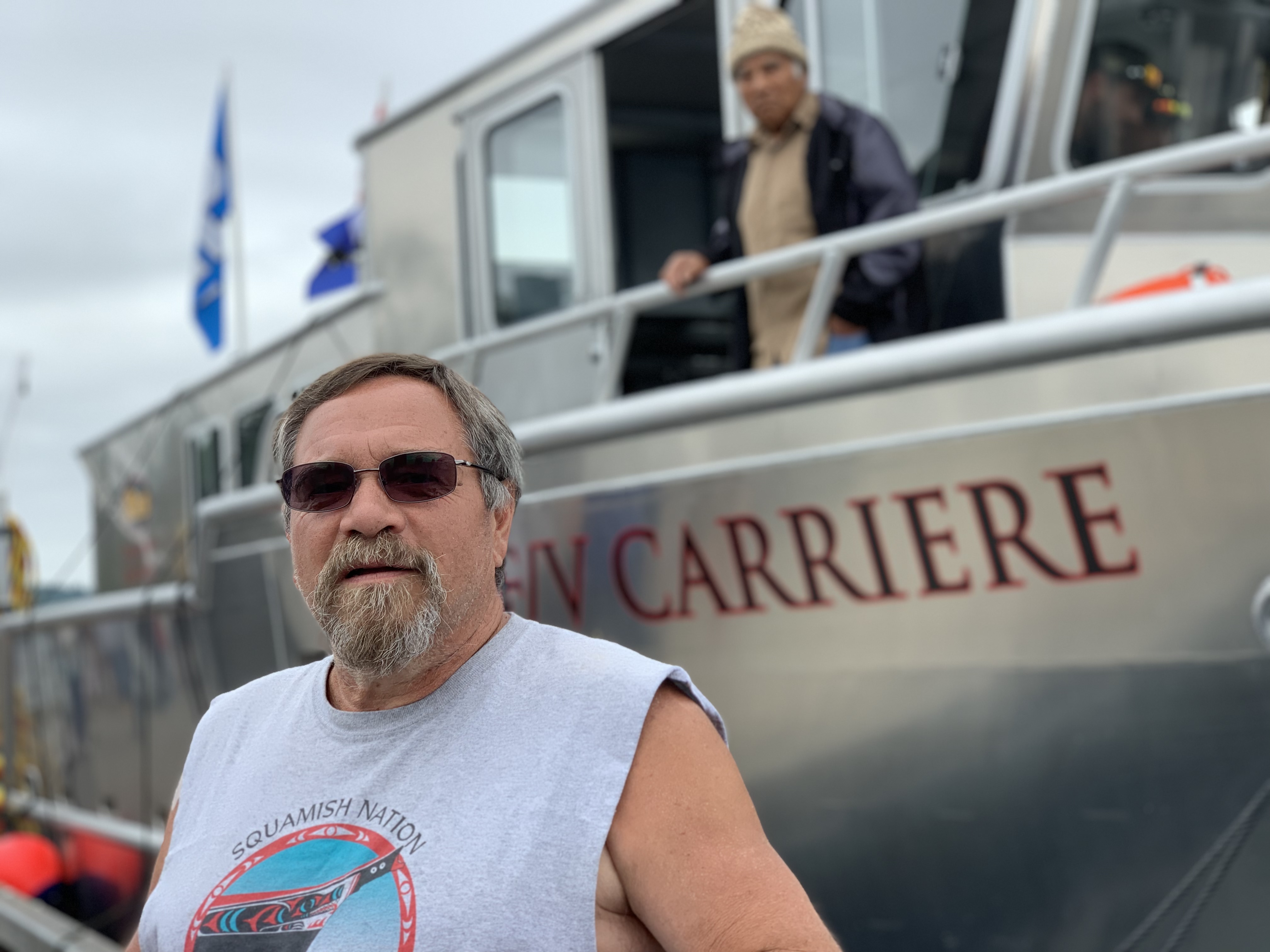
Carriere said he was overwhelmed with gratitude at the honor.
Carriere had helped design the new dive boat and was set to be its skipper before health issues forced an early retirement, said Jim Boure, Suquamish Seafoods Dive services manager. “His fingerprints are all over the design of this boat and now he’ll be with us every time we go out.”
Suquamish Seafood Enterprises, which is owned by the Suquamish Tribe, contracts Tribal divers to harvest geoduck from local waters. The business harvests and markets approximately 420,000 lbs. of wild geoduck each year.
Geoduck is a large clam considered a delicacy throughout much of Asia and is enjoying growing popularity in western markets.
Reprinted with permission.)
A month after the shooting death of Stonechild Chiefstick – as the Suquamish community has finally put him to rest – we remain shocked and saddened by this killing. Chiefstick was a much-loved member of our community whose children live here on the Port Madison Indian Reservation.
Chiefstick died on July 3 during an encounter with the Poulsbo Police Department amidst crowds gathered to watch fireworks at the city’s Waterfront Park. In spite of this tragic shooting mere minutes earlier, the city of Poulsbo went ahead with the celebration as scheduled.
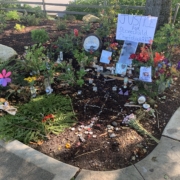
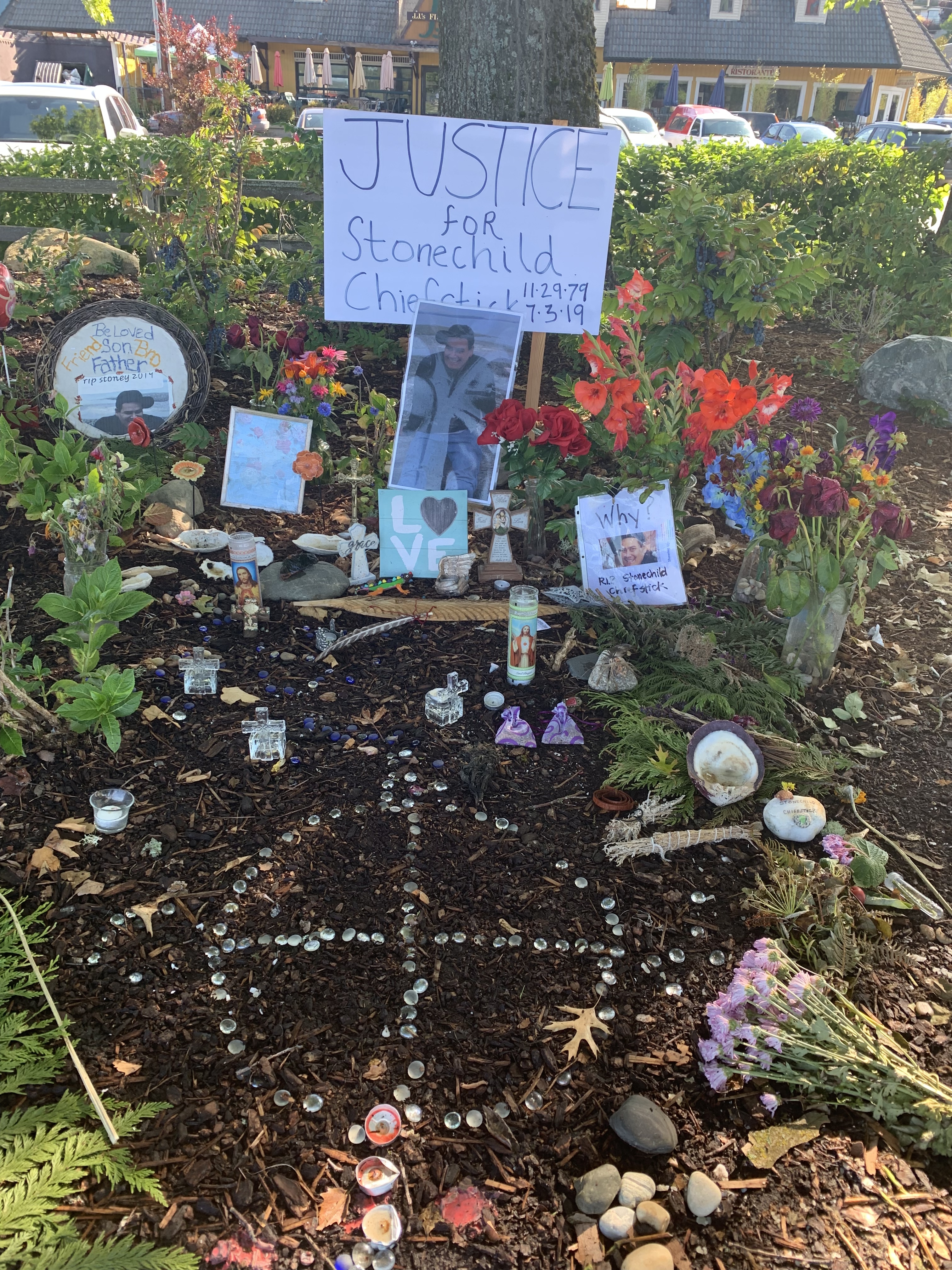
Hours later, the family created an altar at the site of the killing, where those who loved Chiefstick offered expressions of grief and loss. Dozens of family members, Tribal members, and supporters gathered for an impromptu candle light vigil on July 6, offering songs, prayers, and remembrances.
Yet on July 20, we learned this sacred site had been desecrated, creating still more heartbreak.
These events are tragic, but far from unique. Members of our Tribe, from school age through esteemed elders, report incidents of hostility and discrimination when shopping, attending school, or being stopped by police in Poulsbo and other parts of North Kitsap County. Nor is the vandalism of a sacred memorial unique. In 2000, the grave of Chief Seattle was vandalized. Until recently, the road signs welcoming visitors to our home and sovereign reservation were riddled with bullet holes. Encountering racist graffiti and racial slurs are part of growing up as Tribal members.
Nationwide, Native Americans are the most likely of any demographic group to be shot and killed by police, according to data compiled by the Centers for Disease Control and Prevention. Native people are three times more likely to die at the hands of police than are white people. Across Indian Country, families grieve loved ones taken from them too soon. Just as happens in the African-American community, some die because they don’t dare to turn to law enforcement when they need protection for fear that they will become the victims. Others die from direct assault by the police, like the deaf woodcarver, John T Williams, who was shot by Seattle Police in 2010.
Even for those who haven’t personally lost a loved one, Native people and other people of color are painfully aware of the long history of violence directed against them across the generations, creating a pervasive historic trauma that infuses all aspects of community life.
We can do better in this region. We must do better.
For those who want to know what they can do, ask yourself, your neighbors, your faith group, your school board, your police, and your city officials to make the hard choice to become agents of positive change, to make the honorable decision to always call out racism in all its ugly forms, and to rebuke anything or anyone that would shorten or further traumatize the lives of Native Americans and other people of color.
The Suquamish Tribe and the City of Poulsbo have maintained a productive government-to-government relationship for more than a decade now. This is a good beginning. But it is only a beginning.
We anticipate holding government-to-government discussions with City Council members regarding the events surrounding the killing of Chiefstick and measures the City of Poulsbo is taking to fully adhere to the terms of the voter-approved Initiative 940 and the new laws now codified with the passage of House Bill 1064.
If fully implemented, we believe these measures can help reduce police shootings, especially those involving racial profiling and the mentally ill, via training in de-escalation, mental health, and cultural competency. The Suquamish Tribe provides funding to Poulsbo Police and other state and local law enforcement for equipment and training designed to improve the safety of their officers and communities. We are expecting renewed assurances this funding is being used to reduce harm to human life, as intended.
We look forward to the conclusion of the independent commission investigating the incident and hope to learn:
Nothing can bring Stonechild Chiefstick back to us and to his family. Nevertheless, we call on the community to come together to stop the needless killings and maiming of Native Americans, other people of color, and those suffering from mental illness.
We rely on police for our safety. Nonetheless, we are looking to city and law enforcement leaders to set a standard of respect for all members of the community, regardless of their race or heritage. Perhaps, with the right sort of leadership, the death of Stonechild Chiefstick can become a catalyst for the kind of change needed to create a community that is not only safe, secure, and sustaining for all its residents, but also becomes a standard of success for other communities to follow.
The Suquamish Tribal Council is a seven-member elected body that represents the Suquamish Tribe, led by Chairman Leonard Forsman.
Here are some great summer safety tips from Seattle Children’s Hospital:
THURSDAY AUGUST 15 9AM – Golf Tournament 5PM – Camping Areas Open FRIDAY AUGUST 16 3PM – Vendors Open 4PM – Pageant Royalty Arrive by Canoe 4:30PM – Royalty Pageant […]
Thursdays, 10am-6pm – Culture Activities Office, Old Tribal Center on Sandy Hook.
July 19, afternoon – Charles Lawrence Boat Ramp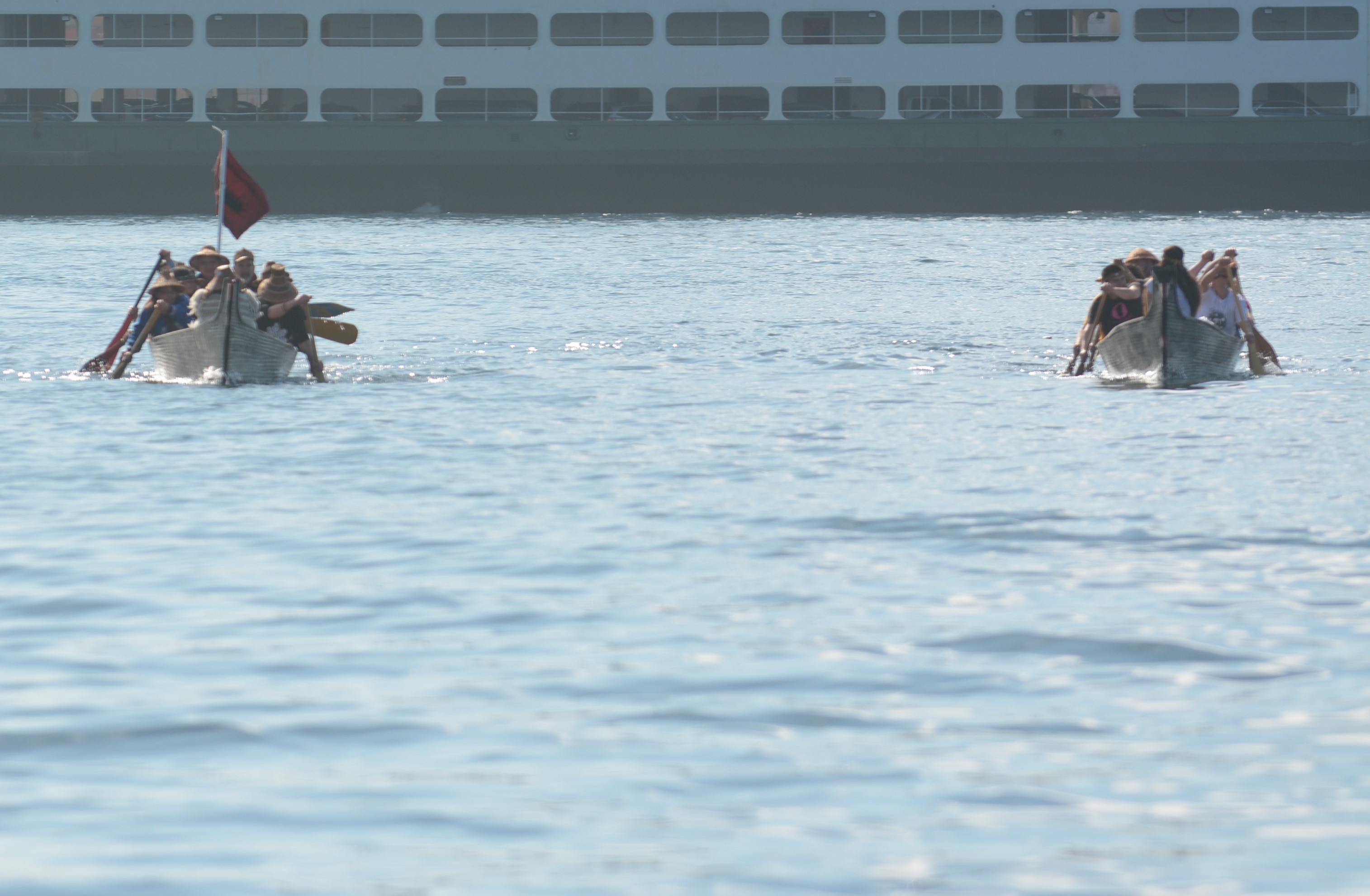
July 19, 7pm — House of Awakened Culture
July 20, 6pm – House of Awakened Culture
July 21, morning – Charles Lawrence Boat Ramp
July 22
July 23
July 24
July 24-28
Download Vendor Application here.