

On March 24, 2026, Gov. Bob Ferguson signed into law a ban on the unauthorized sale of nitrous oxide. Standing alongside him were members of the Suquamish Tribe who were instrumental in the bill’s success.
“The Suquamish Tribe took bold action to protect our people against this product by banning it on our reservation,” said Suquamish Tribal Council Member Azure Boure, who is also the Traditional Plants & Medicine Coordinator for the tribe. “This new statewide law strengthens what we already had in place.”
Nitrous oxide is often sold at convenience stores, comes in flavors such as watermelon and bubblegum, and has no age restriction. Use of the unregulated product can cause weakness, lasting nerve damage, and even death. Last year, as use of the substance became more prevalent in the Suquamish community, tribal government staff brought concerns to Tribal Council, which quickly responded.
The tribe’s ban, which went into effect in September 2025, prohibits the sale of nitrous oxide on the Port Madison Reservation.
“The Suquamish Tribe acted under our own sovereign authority to address this issue because we saw nitrous oxide harming our youth and our community,” said Suquamish Community Health Program Manager and tribal member Jeff Riggins.
While the ban on the reservation was a good first step, it did not prevent stores on neighboring lands from selling the substance.
“I had no idea how big of a problem this was until the Suquamish Tribe reached out,” Sen. Drew Hansen said in a statement. Hansen, along with fellow Washington lawmakers Sen. Jeff Holy, and Reps. Joe Timmons and Dan Griffey, introduced legislation to ban the sale of nitrous oxide. Boure and Riggins, along with Tribal Council Secretary Irene Carper, testified in Olympia on behalf of the bill.
The bill passed both chambers, and the governor signed it into law on March 24, 2026.
“Today shows what it looks like when the tribe leads, and the state follows through,” said Riggins. “At the end of the day, this is about protecting lives and making our tribal community and the entire state healthier.”
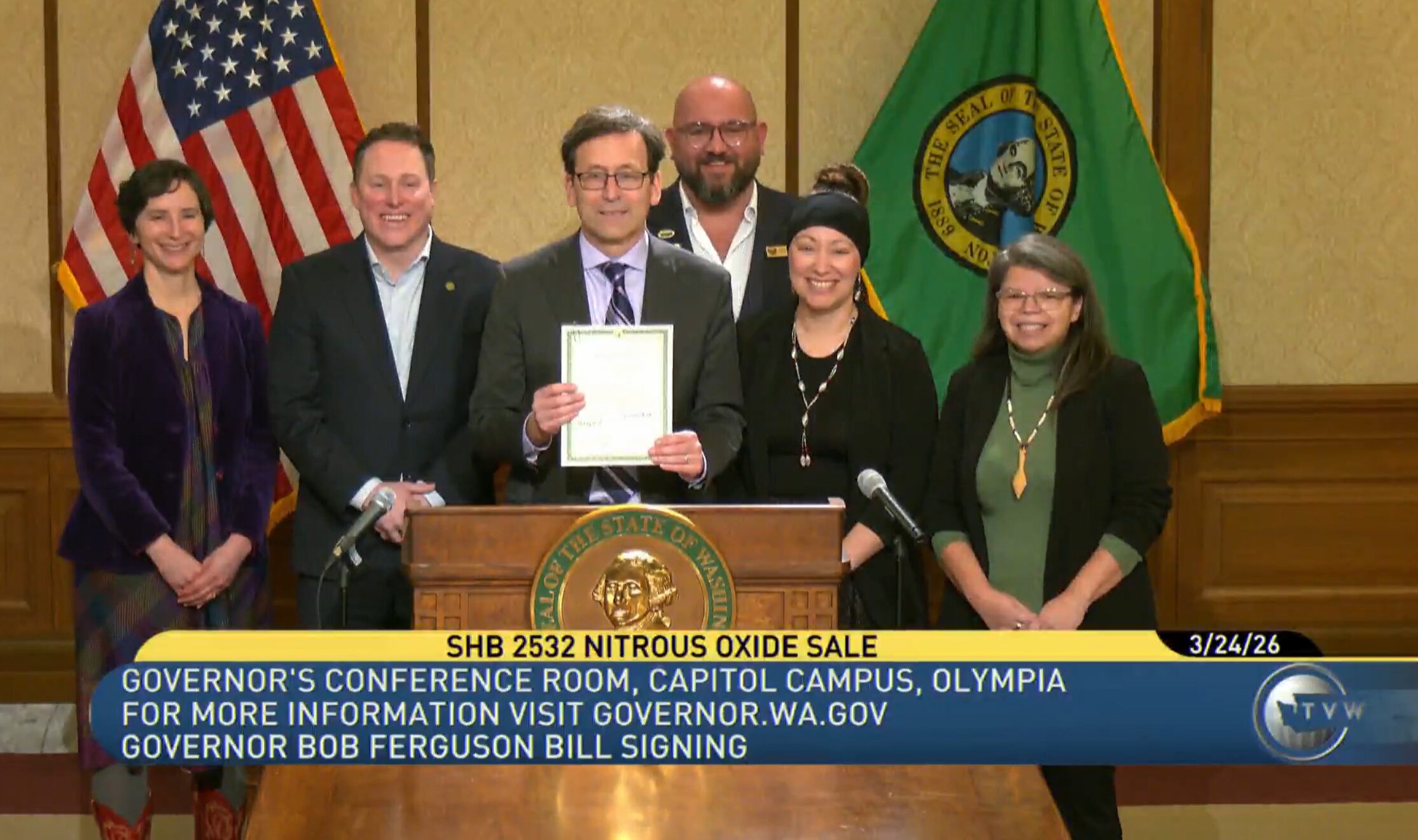
Washington House Bill 2532 makes the unauthorized sale or distribution of nitrous oxide a gross misdemeanor.
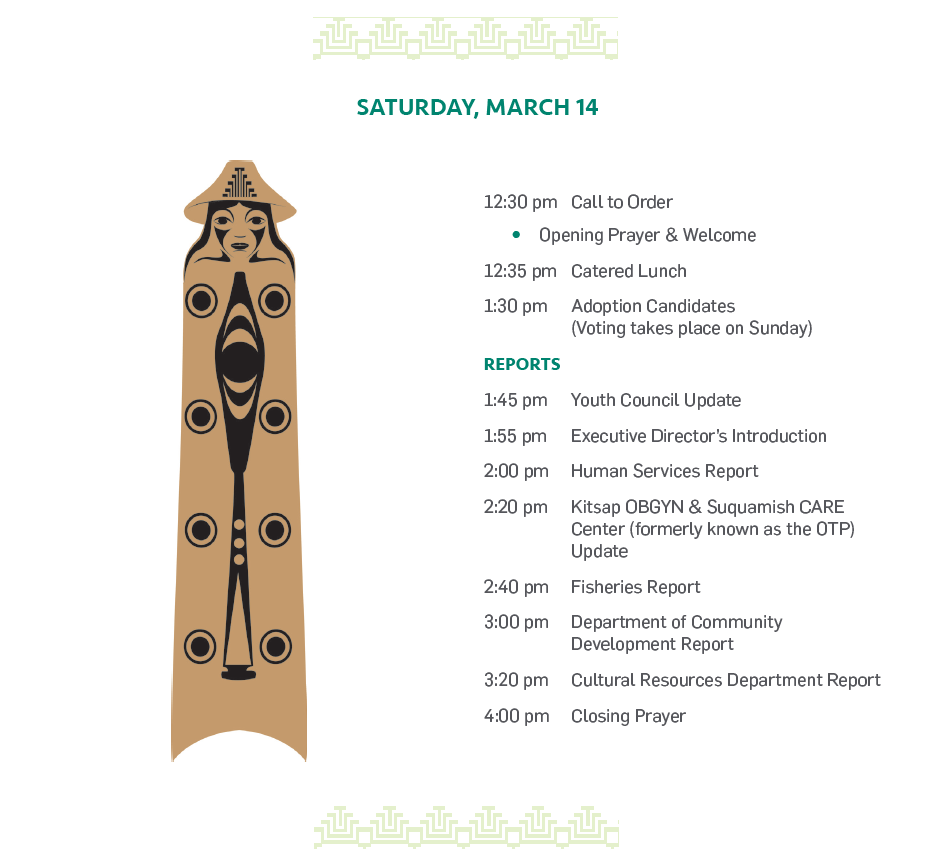
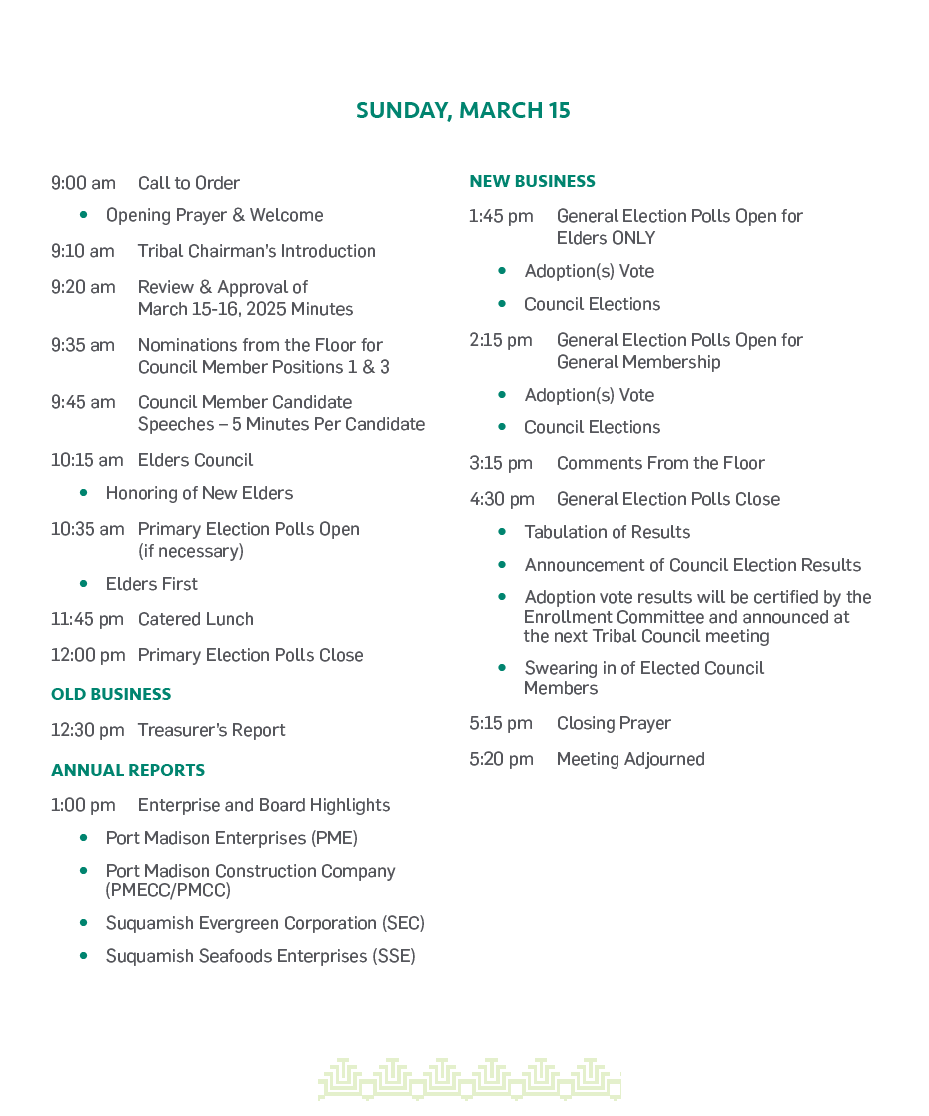
Saturday, March 14, 2026
Purpose: Annual Meeting of the Suquamish Elders
Doors Open: 8am Breakfast: 8:15am Meeting Starts: 9am
Welcome—William Stroud, Elders Council Chairman
Opening Prayer—Dickie Johnson, Elders Council Officer
Roll Call
Introductions
Tribal Council Chairperson Leonard Forsman
Elders Council Liaisons: TC Members Lorilee Morsette; Irene Carper
Elders Council Board Members
Elders Program Staff: Elders Program Coordinator Melissa Lund
Old Business
Review & Approve Annual EC Meeting Minutes from 3/15/25
Reports
Finance Report—Treasurer Renquist
National Indian Council on Aging (NICOA)-Treasurer Renquist
Suquamish Warriors Report—Vice Chair James Henry, Jr.
Elders Program—EP Coordinator Lund
New Business
Elders Council Elections:
Tribal Council Candidates Speeches (3 min. per speaker)
Elders Council Election Results
Comments from the Floor (2 min. per speaker)
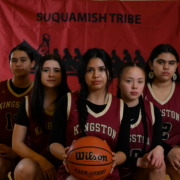
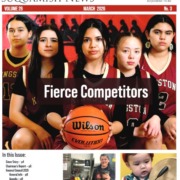
By the time the Kingston girls finally saw the ball drop through the net on Feb. 21, they were already in a deep hole.
Eleven points down in a do-or-die elimination game against Steilacoom at Bainbridge High School, the Kingston Buccaneers hadn’t just been outscored — they’d been tested. The gym was loud. The pressure was on. And for a moment, it looked like the night might slip away before it ever really began.
Then something shifted.
By the second quarter, Kingston had clawed all the way back, taking a lead they would never relinquish. The second half wasn’t just competitive, it was commanding. Hustle turned into turnovers. Defense turned into momentum. And when the final buzzer sounded, Kingston walked off the floor with a 60–51 win and a berth in the state regionals.
For the five Suquamish tribal members on the Kingston Girls Basketball Team – Senior and team captain Tati Fontes-Lawrence (#14), Senior Talynn Marquez (#10), Senior Aliana Chiquiti (#4), Freshmen Taya Fontes-Lawrence (#32), and Shaunie Cordero (#13) – it was the latest chapter in a season defined by grit, belief, and a refusal to accept the expectations placed on them.
Led by Head Coach and Suquamish tribal member Charles Deam Jr, together they helped propel one of the smallest 2A schools in Washington to the state stage — not by overpowering opponents, but by outworking them.
LOW EXPECTATION, RISING BELIEF
At the start of the season, state wasn’t part of the conversation.
A “good year” would have meant beating Bainbridge, reaching districts, or simply putting together a winning season. Anything beyond that felt like a stretch.
But Kingston opened strong, starting 7–1. When a pair of tough back-to-back losses shook their confidence, the team responded with grit. Belief followed results. And soon, comparisons began to surface — not just from fans, but from the coaching staff — likening the team to the Seattle Seahawks: overlooked, underestimated, and thriving in that role. They embraced it.
“We might lack height,” says Cordero, “but we don’t lack heart.”
Small in size, though, in more ways than one. Kingston is the smallest school in its 2A division, barely above the cutoff. The Buccaneers just turned it into fuel. Opponents with size found themselves chasing guards, coughing up turnovers, and wearing down as Kingston kept coming. And while the Lady Bucs proved themselves to be fierce competitors, they’ve also shown true sportsmanship, taking their losses with heads held high and just as likely to help a competitor off the floor after a fall as one their opponents’ own teammates.
FIGHTING THROUGH CHALLENGES – TOGETHER
The season wasn’t just about wins.
Senior Talynn Marquez worked through a slow, frustrating recovery from an ACL injury suffered in the previous year’s first home game — a process marked by setbacks, doubt, and the feeling of being behind where she “should” be. Others battled confidence issues, especially early, overthinking mistakes and spiraling after missed shots or turnovers.
What changed wasn’t just growing talent. It was trust.
Teammates learned to read body language, stepping in with encouragement before doubt could take hold. Mistakes stopped defining possessions. Players stopped retreating inward and started leaning on each other.
“That’s when things really came together,” says Marquez. “We started being happy for each other.”
A turning point came off the court during Christmas break — a team sleepover filled with charcuterie boards, scary movies, and a prank that didn’t quite land but bonded them anyway. From that point on, chemistry wasn’t forced. It was felt.
MOMENTS THAT DEFINED THE RUN
Recent games have showcased that identity. Kingston’s defense has forced lopsided turnover margins. The bench stays loud, engaged, and relentless — the “sixth player” making sure the gym never goes quiet.
“Our heart, our quickness, our hustle – and everyone out there ,” says Chiquiti. “That’s how we got here.”
There were wins that mattered more than the score.
Beating North Kitsap — a longtime rival that had dominated them in middle school — was emotional. So was surviving the early storm in their most recent game against Steilacoom, when Kingston fell behind 11–0 before a pivotal timeout.
“They had their turn,” Coach Deam told them in the team huddle. “Now it’s our time to get after them.”
The message stuck.
Kingston adjusted, leaned into conditioning, and turned a faltering defense into a point-racking offense.
MORE THAN A FINAL SCORE
Throughout the season, Suquamish Tribe Chairman Leonard Forsman and his wife Jana have been among those in the stands cheering loudest.
Ahead of the team’s next game — one that will determine whether they advance to the state finals — Forsman put their run in perspective.
“It’s especially meaningful to me because of the prominent Suquamish players and coaches contributed to the overall team victory, reflecting the discipline, resilience, and teamwork shown by everyone involved,” says Forsman. “We wish the Bucs the best as they advance in the post season and congratulate them on what is already a great season. They have proven themselves to be true winners, both on and off the court.”
It’s a sentiment the players themselves echo.
Win or lose, they know what they’ve accomplished.
Out of more than 40 teams in their division, Kingston stands among the final 16. Seniors will walk away having helped build something rare. Freshmen have learned what belief feels like — and how hard it must be defended.
“There won’t be another team like this one,” says Taya Fontes-Lawrence. “We all know that.”
And that’s why, before the next tip-off even happens, they know they’ve already won
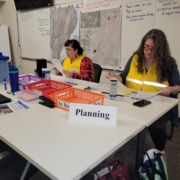
Suquamish Emergency Management was put to the test during a recent sewage spill, bringing together the combined efforts of the Suquamish Tribe’s Community Development, Fisheries, and Communications departments to assess risks to the community and environment. By sharing real-time information and coordinating each department’s role, the tribe was able to keep the community informed and manage the incident before it had larger impact.
“When emergencies happen, no single department or agency can manage everything alone. Whether it’s severe weather, a power outage, a public health concern, or a larger incident, keeping the community safe takes coordination and strong partnerships,” says Cherrie May, who leads the Suquamish Tribe’s Emergency Management team. “That’s why collaboration is at the center of everything we do.”
Emergency management starts with teamwork inside the Tribe. The Office of Emergency Management works closely with departments such as Public Safety, Community Development, Natural Resources, Health Services, Facilities, Communications, and IT. By planning together, meeting regularly, and sharing information, the goal is to have each department understand its role before an emergency occurs.
“This preparation helps us to respond quickly, reduce confusion, and keep services running when the community needs them most,” says May.
Because emergencies often affect more than one community, Suquamish also works closely with regional partners. The tribe is part of the Olympic Regional Tribal-Public Health Collaboration and Mutual Aid Agreement, which connects tribes, cities, and counties across the area. This agreement allows local health agencies and tribal governments to share staff, equipment, and other resources when an incident grows beyond the capacity of any single jurisdiction.
“This ensures that help can move quickly and everyone is ready to support one another,” says May.
Partnerships are strengthened through training and exercises. That’s why Suquamish Emergency Management regularly works with regional agencies to practice how they would respond together during an emergency.
A recent exercise with the Kitsap Public Health District and Kitsap County Department of Emergency Management focused on coordination, communication, and decision-making during a public health incident. Practicing together helps partners understand each other’s roles and builds the trust needed to work effectively during real events.
A real-world example of this coordination happened in late 2024 after a major wind storm disrupted power across most of the Port Madison Reservation. The outage affected a critical water well system serving tribal housing. Emergency Management immediately coordinated with Puget Sound Energy’s Emergency Coordination Center to prioritize work restoration efforts with lights and water turned back on within six hours.
“Because these relationships are already in place, resources can be requested quickly, information moves more smoothly, and the community receives clear and consistent updates and support,” says May.
At its core, emergency management is about relationships. By working together across tribal departments and with regional and state partners, the Suquamish Tribe is strengthening its ability to protect the community, ensure sovereignty is upheld, and build long-term resilience.
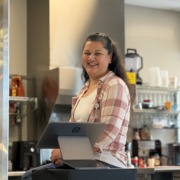
New Nutrition Bar opens at Fitness Center
The Suquamish Fitness Center has launched its new Nutrition Bar featuring healthy drinks and snacks with hours tuned to support both morning through lunch rush workouts as well as evening classes, games, and other events.
The Nutrition Bar is open M-F from 9:30am1:30pm and M-Th from 4pm-8pm.
“We’re in soft opening mode and will be refining our menu as we progress,” said Nutrition Bar Manager Melissa Stewart, “but we’ve already got a lot of great options to offer.”
Among them:
“We are working on having more salad and smoothie options in the future along with wellness shots and some hot food options,” said Stewart. “We appreciate any feedback on what we offer and welcome suggestions on what you would like to see here.”
SPRING INTO HEALTH
The opening of the Nutrition Bar coincides with some new seasonal programing at the Fitness Center.
“We’re excited to partner with Community Health for a ‘Spring into Health’ event beginning
March 25 when we’ll start a 10-week program for high school students and adults with lots of incentives and good information,” said Fitness Director George Hill.
Meanwhile, Hill said plans are moving forward to offer Elders Massage Therapy at the Fitness Center.
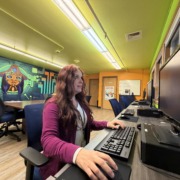
Tribal Community Computer Lab now open
A newly repolished Tribal Community Computer Lab operated by the Suquamish Tribe Education Division is now open on Sandy Hook Road, providing tribal members, their families, and tribal government staff with free access to computers, high speed internet, and online tools in a quiet, dedicated workspace.
“Whether you’re completing school assignments, updating a résumé, applying for jobs, or simply need a quiet place to access online resources, the computer lab is designed to support your goals,” said Kali Chargualaf, who helps manage the lab as part of her Higher Education duties. “Please come by anytime.”
Recent additions to the lab include a complimentary coffee bar and a comfortable living room-style couch area, along with a big table with seating for six and plenty of room for those that might need to spread out paperwork or work on a project.
Open weekdays from 8am–4:30pm, the computer lab is located just inside the main entrance of the Old Tribal Center. The space is available to students at all levels, job seekers, Tribal Elders, and community members who may not have consistent access to technology at home. Education staff say the lab is intended to be flexible and welcoming, whether someone needs a short visit to submit paperwork or a longer block of time to focus on coursework or applications.
No appointments or reservations are required to use the lab, though the space can be reserved when needed. For more information contact Kali Chargualaf at (360) 6892254 or KChargualaf@ Suquamish.nsn.us