Some Good News: Wellness Staffer Does Not Have Covid-19

From Suquamish Tribe Executive Director Shyla Spicer:

I wanted share an update on test results regarding our Wellness Center staff member. Testing confirms the staff member DOES NOT have COVID-19.

We continue to respond to the rapidly evolving events surrounding COVID-19. We remain committed to providing updated information as it becomes available.

We appreciate your understanding and patience as we continue to deal with this global health crisis and work to protect the health and safety of our staff and community.

Tribal Government Shifting to Reduced Operations

The Suquamish Tribe will shift to reduced government operations for the next four weeks.
Beginning March 16, the vast majority of staff are instructed to remain home until at least April 10, at which time the situation will be reassessed.
Staff who are able to telecommute will do so. Essential services that must be provided in person will be conducted on modified schedules.
To be clear, Tribal government will continue, as much as possible, to provide essential services. More specifics on that will be announced in the coming days.
 
These are unprecedented times, requiring difficult decisions. This is one of them.
Health professionals say the best way to limit the spread of COVID-19 is to avoid gatherings and limit day-to-day contact. We are asking our employees and their families, and all members of our community to stay at home as much as possible and to avoid direct contact with others.
Your cooperation with “social distancing” can help save lives. Please keep washing your hands often.
 
These actions, along with other steps already taken, can help slow the spread of the disease, allowing local health care systems to keep up with the rate of new infections and to assist those who need intensive medical care.
We remain committed to doing everything possible to reduce the risks and to care for Tribal members, staff, and the wider community. We will regularly update our official Facebook and government website with the latest information.
 
We have survived hard times before. We will survive this.
We are pulling together. We are caring for our Elders and our children. We will get through this together.

General Council Postponed

In light of the unprecedented emergency created by the COVID-19 outbreak, the Suquamish Tribe General Council will not be held on March 15 as scheduled.
In a resolution approved by Tribal Council March 12, the General Council is now tentatively rescheduled for June 28.
This decision was not made lightly. We are especially concerned about our Elders and those with medical conditions that could make the disease serious or even fatal. This decision also came at the urging of a significant number of Tribal members who raised similar concerns.
Health experts say the best way to limit the spread of COVID-19 is to cancel large gatherings and limit person-to-person contact as much as possible.
Therefore, Tribal Council determined the most prudent course of action is to delay General Council until the threat to our people – and our wider community – has subsided.
The positions of Tribal Council Chairman and Secretary will remain on the ballot and elections for those positions will be held when General Council reconvenes. Until then, the current Council Members will remain in those positions.
The Suquamish Tribe remains committed to doing everything possible to reduce the risks and to care for Tribal members, staff, and the wider community.

Notice of closure: COVID-19 update

A staff member of the Suquamish Tribe Wellness Center, who has been ill, was tested for COVID-19 and is currently self-isolating at home. The test results are pending.
To be cautious, the Tribe is closing the Wellness Center beginning today and will reopen on March 17 pending the test results.
During the closure, the Wellness building will be cleaned and sanitized. Wellness staff is reaching out to their clients to make alternative plans for enabling continuity of services.
If you have any questions about care at the Wellness Center, you may direct them to:
• Brian Burwell at bburwell@Suquamish.nsn.us or
• Jonathan Glover at jglover@Suquamish.nsn.us or 360-394-8601
The Suquamish Tribe is closely monitoring the emerging coronavirus situation in our region. Staff are fully engaged in planning and preparing for all scenarios.
Meanwhile, increased cleaning requirements have been implemented and additional supplies are being provided for personal hygiene and common spaces.
Accommodations are being made now to provide more opportunities for staff to telecommute when possible. The Suquamish Tribe is working hard to do everything possible to educate, reduce risk, and care for Tribal members, staff, and the wider community.
We are committed to providing a transparent flow of information, as it becomes available.

Tribal Council Update on COVID-19


Dear Tribal Citizens:

The Suquamish Tribal Council and Tribal government staff would like to take this opportunity to inform you of our efforts to minimize the impacts of COVID-19 coronavirus.  We understand that our Tribal community is concerned, as we are, and want to protect our most vulnerable population: Elders and those with underlying health conditions.  This is an evolving situation, and we are monitoring information provided by federal, state and local governments, and by our own health experts.

As you know, health officials are suggesting that government and businesses consider cancelling non-essential gatherings and meetings.

In light of this unprecedented situation and potential health risks, the Tribal Council has made the following decisions regarding upcoming Tribal gatherings:

  1. The General Council meeting will be limited to one day, Sunday, March 15, 2020 at Kiana Lodge. This Monday, Tribal Council will approve a modified agenda for our Sunday General Council meeting.  This agenda will include elections and reports (as required by our constitution) with the intention of reducing exposure. The Saturday session, including the Elders meeting, will not be held. 
  2. There will be no childcare provided during the Sunday meeting.
  3. The Elders Cruise to Mexico will be postponed.
  4. A Time to Gather, the Suquamish Foundation’s annual fundraising dinner, will be postponed.
  5. All other non-essential travel and events are now under review.

Please access the Tribe’s Facebook page for the most immediate updates.

Please continue to follow precautions in your everyday lives, including frequent hand-washing, wiping down common surfaces and staying home if you are sick.

If you have questions regarding the best way to protect your health, please contact:

Nehreen Ayub – (206) 920-0748 / nayub@suquamish.nsn.us
Barbara Hoffman – (360) 394-8468 / bhoffman@suquamish.nsn.us

If you have questions about event management, such as General Council, please contact Rebecca Purser (360-394-8406 / rebeccapurser@suquamish.nsn.us) or a Council member.

The Suquamish Tribe has withstood many challenges since first contact over 200 years ago and we are confident that we can manage this threat successfully by being unified, informed and appropriately decisive.


Respectfully,


Leonard Forsman, Chairman

Wayne George, Vice Chairman

Nigel Lawrence, Secretary

Robin Sigo, Treasurer

Rich Purser, Councilmember

Jay Mills, Councilmember

Sammy Mabe, Councilmember


Suquamish Tribe taking steps to care for Tribal members and wider community through coronavirus outbreak

The Suquamish Tribe is monitoring the Covid-19 coronavirus situation carefully while continuing to take steps to educate, reduce risk, and care for Tribal members and the wider Port Madison Indian Reservation community.
The Tribe and our health experts are coordinating with Washington State Department of Health, Kitsap Public Health District, and other local heath jurisdictions. At this time, we are especially focused on those who are most vulnerable to the coronavirus, particularly elders and those with compromised immune systems.
The Tribe is also weighing options on how to best proceed with the upcoming General Council meeting currently scheduled for March 14-15, as well as two upcoming Elders trips.
The Suquamish Tribe will continue to provide updates as needed.
In the meantime, simple measures can be taken by each member of the community that are proven to help limit the spread of this disease.
Among them:
• Wash your hands often and thoroughly with soapy water for at least 20 seconds. Or use an alcohol-based hand sanitizer, with at least 60% alcohol.
• Avoid touching your eyes, nose, or mouth with unwashed hands.
• Try to stay at least six feet away from anyone who is coughing or sneezing.
• Cover your coughs or sneezes in your elbow or into a tissue, then throw the tissue in the trash and wash your hands.
• Clean and disinfect high-use objects and surfaces such as doorknobs, faucet handles, railings, and shared keyboards.
• If you are ill, stay home and seek healthcare if needed.

The following websites are the some of the best sources for coronavirus updates and information:


Suquamish Tribe Chairman Calls on U.S. Congress to Adopt Native Voting Rights Modeled on Washington State

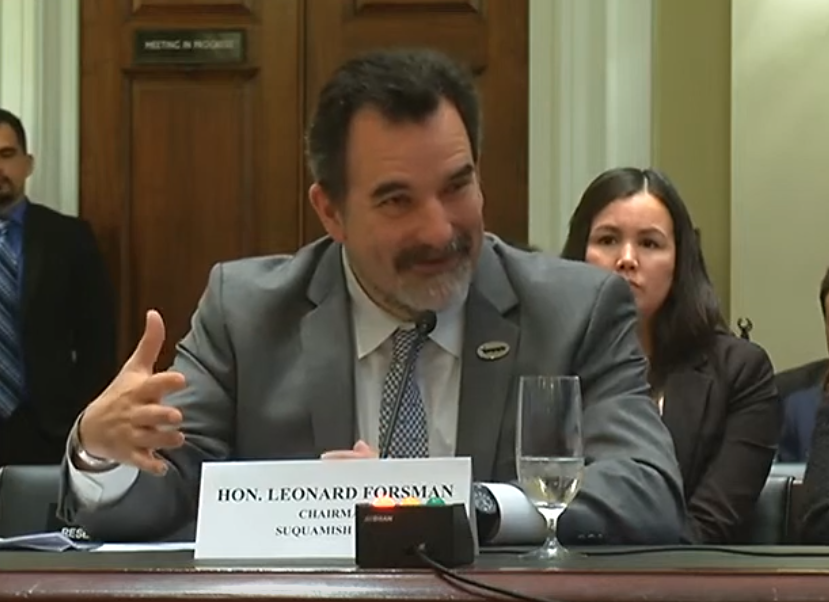
Washington State’s Native American Voting Rights Act is a model the rest of the United States should follow as the 2020 election season begins. This is the message brought to Washington, DC by Leonard Forsman, Chairman of the Suquamish Tribe and President of the Affiliated Tribe of Northwest Indians.

Forsman testified today before the Elections Subcommittee of the Committee on House Administration at a hearing entitled “Native American Voting Rights: Exploring Barriers and Solutions.” The hearing took place at the Longworth House Office Building.

Forsman described the many barriers to voting facing Native people across the United States.

Among them, jurisdictions that refuse to accept Tribal IDs for those registering to vote. Some tribal citizens also lack the type of home addresses that correlate with the standard address system. Instead, many use PO Boxes or other addresses not accepted for establishing residency.

A third barrier is the locations of ballot drop boxes that are often outside of reservation boundaries and available only for limited hours. “This created a hardship for many tribal citizens that do not have means of transportation,” said Forsman.

Washington State’s Native American Voting Rights Act, or NAVRA, adopted by the state legislature on March 5, 2019, helped fix each of these challenges. Forsman urged the committee to consider similar provisions as Congress addresses voting rights issues nationwide.

Specifically, Washington’s NAVRA allows:

  • Tribal citizens in Washington State to use tribal IDs to register to vote.
  • Tribes to request that at least one ballot box be located on their reservation. The tribe can choose the location.
  • Tribal citizens to use nontraditional residential addresses for voter registration. The location of the tribally designated ballot box can serve as their address, which is especially important for homeless citizens and others without a stable residence.

“Since the passage of NAVRA, tribes in Washington are now partners with the State,” Forsman said. “The Suquamish Tribe is now able to have direct involvement with the state in planning and ensuring that our people do not face obstacles while exercising their right to vote.”

Forsman, who is also a member of the Executive Board for the National Congress of American Indians, noted NCAI strongly favors legislation such as HR 1694, the Native American Voting Rights Act of 2019, to remove voting barriers.


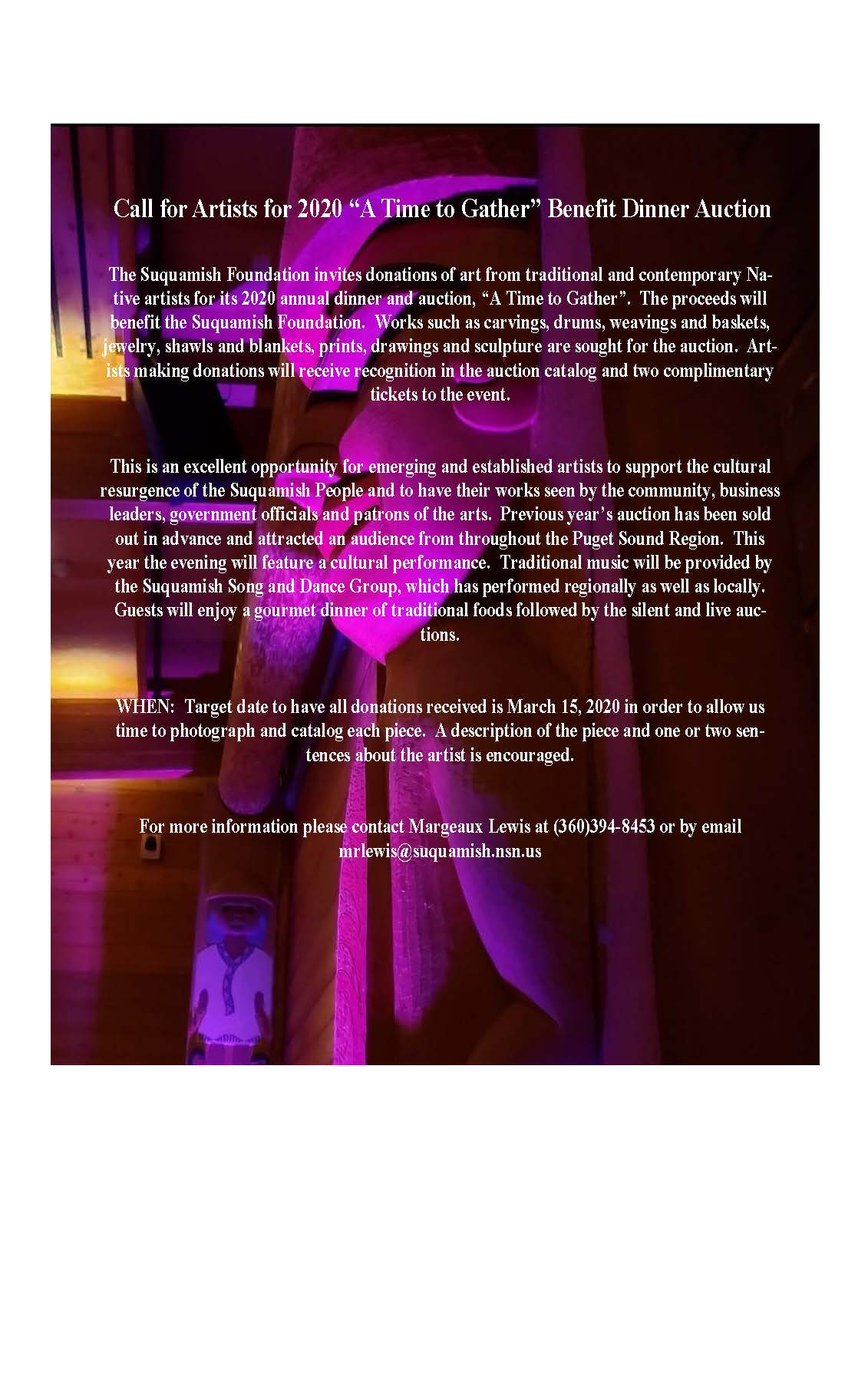
Call for Artists for 2020 “A Time to Gather” Benefit Dinner Auction

The Suquamish Foundation invites donations of art from traditional and contemporary Native artists for its 2020 annual dinner and auction, “A Time to Gather.”  The proceeds will benefit the Suquamish Foundation.  Works such as carvings, drums, weavings and baskets, jewelry, shawls and blankets, prints, drawings and sculpture are sought for the auction.  Artists making donations will receive recognition in the auction catalog and two complimentary tickets to the event.

This is an excellent opportunity for emerging and established artists to support the cultural resurgence of the Suquamish People and to have their works seen by the community, business leaders, government officials and patrons of the arts.  Previous year’s auction has been sold out in advance and attracted an audience from throughout the Puget Sound Region.  Our guests will enjoy a gourmet dinner of traditional foods followed by the silent and live auctions.

WHEN:  Target date to have all donations received is by March 15th, 2020 in order to allow us time to photograph and catalog each piece.  A description of the piece and one or two sentences about the artist is encouraged.

For more information please contact Margeaux Lewis at (360)394-8453 or by email mrlewis@suquamish.nsn.us


Suquamish Tribe wins land use case at George’s Corner

Legal victory safeguards Tribe’s Grovers Creek Hatchery

Kitsap County must comply by Dec. 20

By Melody Allen

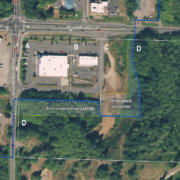
George’s Corner is a rural crossroads development located 1.5 miles west of Kingston, Washington, at the intersection of Hansville Road and State Route 104 in northern Kitsap County.   Under the State of Washington’s Growth Management Act (GMA), George’s Corner is a special land use designation called a “Limited Area of More Intense Rural Development” (LAMIRD).  When the GMA was passed in 1990, State legislators recognized the presence of small commercial development pockets that primarily serve the local rural community where there might be a gas station, store and restaurant.  The purpose of the GMA LAMIRD requirements and designation is to provide a tool for local governments to legally define the boundaries of pre-existing urban uses before July 1, 1990 that allows those uses to continue within the LAMIRD boundaries while at the same time placing constraints on future urban sprawl outside these designated boundaries into rural lands.  The George’s Corner LAMIRD boundaries were established in 2004 and encompass specific portions of each of the four corners at the crossroads.

In 2018, Kitsap County proposed to expand the southeast corner of the George’s Corner LAMIRD that would allow development to encroach closer to critical wetland areas associated with Grovers Creek.  George’s Corner is located in the Grovers Creek Watershed and contains a wetland system associated with Grovers Creek that drains to Miller Bay where the Tribe operates the Grovers Creek Hatchery, a Chinook and chum salmon hatchery.   Grovers Creek has unique features which make it particularly sensitive to contaminates found in stormwater draining from impervious surfaces.

Impacts to Grovers Creek from increased development, increased traffic, and urbanization directly impact the hatchery as evidenced by poor water quality and low or no water quantity flowing to the hatchery between mid-May to September.  During that time, surface water from Grovers Creek is unusable for rearing salmonids due to its poor quality.  These impacts, specific to Kitsap County between 2006 and 2011, are well documented in the Suquamish Tribe’s Chapter in The 2016 State of Our Watersheds, A Report by Treaty Tribes in Washington. Impervious surface increases associated with the George’s Corner LAMIRD were identified as impacting stream conditions.

Several years ago, the Tribe joined the National Oceanographic Atmospheric Administration and Washington State University in a study that exposed Grovers Creek Hatchery coho salmon to urban runoff collected from a Highway 520 drain.  Every coho exposed to the runoff died.  Some died within a few hours, but all died within one day.  The surprising results of this study raised awareness of the link between urban stormwater runoff and salmon survival and the need to address stormwater runoff that drains to salmon-bearing waters.

The Fisheries Department and Chairman Leonard Forsman filed comments in opposition to the County’s proposed LAMIRD expansion expressing concerns about increased commercial land use intensity in an area that is in close proximity to Grovers Creek, which is listed as an Endangered Species Act-listed salmon-bearing stream with important habitat, concerns about potential impacts to the Tribe’s Grovers Creek Hatchery, and concerns about impacts to the Tribe’s treaty-reserved resources.

Despite the Tribe’s repeated requests to the County to withdraw the proposed action to expand the LAMIRD, the Kitsap County Board of County Commissioners adopted the County staff’s recommendations and removed a portion of undeveloped land from the southern portion of the LAMIRD and expanded commercial development beyond the original LAMIRD boundary to the east, on lands closest to Grovers Creek that include wetlands and a steep slope.  This expansion would allow further commercial activity in close proximity to the steep slope and Grovers Creek that would cause further negative impacts to the water quality of Grovers Creek and the Grovers Creek Hatchery from stormwater runoff draining from impervious surfaces and other environmental impacts.

In February 2019, the Tribe’s Office of Tribal Attorney filed an appeal with the Central Puget Sound Growth Management Hearings Board (Growth Board) challenging the validity of Section 14(3) of Kitsap County Ordinance 565-2018 and its compliance with the GMA LAMIRD provisions and GMA goals designed to protect the environment and water quality and to prevent urban sprawl in rural lands.  The Tribe requested the Growth Board to declare that the County’s action was clearly erroneous, failed to comply with the GMA, and requested the Growth Board to issue an order of invalidity, a discretionary enforcement tool available to the Growth Board.

In August 2019, the Growth Board agreed with the Tribe and found that the LAMIRD boundary adjustment failed to comply with the LAMIRD statutory requirements for setting boundaries that are a one-time recognition of existing 1990 areas and uses.  The Growth Board also found that the County improperly acted to meet real or perceived needs for additional commercial lands beyond the original 2004 LAMIRD boundaries and failed to contain low-density sprawl by perpetuating a pattern of low-density sprawl that substantially interfered with the GMA goals that are designed to concentrate urban growth in urban areas and protect the environment and enhance the state’s high quality of life.  The Growth Board remanded Section 14(3) of Ordinance 565-2018 to the County to take action to comply with the GMA and declared Section 14(3) invalid in its entirety.  The Growth Board has set a compliance schedule that requires the County to comply with its Order by December 20, 2019 and file a Compliance Report/Statement of Actions Taken to Comply.   The Tribe will continue its legal role in these compliance actions while continuing technical, legal, and policy efforts to protect treaty-reserved rights and critical habitat for the next seven generations.


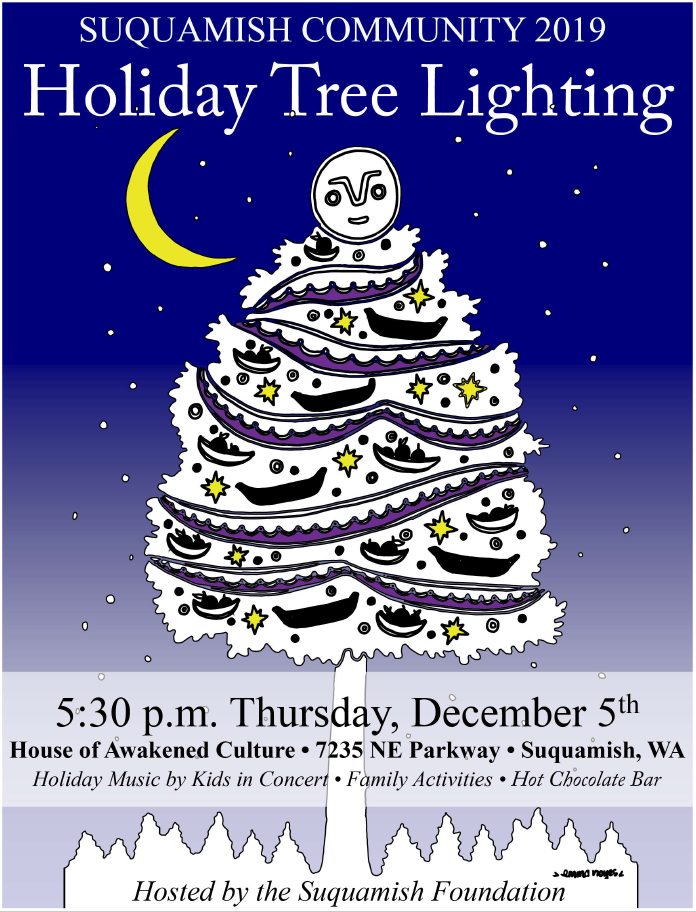
2019 Holiday Tree Lighting