

Call For Poets: Bring Original Poetry Into A Shared Community Space
The City of Bainbridge Island is seeking poets to be part of an exciting public art project that will bring original poetry into a shared community space. This opportunity invites poets to submit a portfolio of their work for review, with the goal of selecting voices that reflect creativity, diversity, and a strong sense of place. In the second phase of the project, up to ten poets will be chosen to create a new, original poem based on specific project criteria (outlined here), each receiving a $50 honorarium for their contribution. From these submissions, three poems by adult poets and one poem by a high school student will be selected for final inclusion in the public art installation, with each of those poets receiving $500. This is a unique opportunity to have your work experienced by a broad public audience while being recognized and supported as a contributing artist.
In 1998, an art installation was commissioned for Bainbridge Island City Hall’s Council Chambers. The piece consists of alternating shiny aluminum and rusty steel floor-to-ceiling panels. A description of the work reads, “Inlaid within [the] rusty panels are shiny aluminum shapes of vegetation typical of Bainbridge Island: rhododendron, salal, sword fern, bracken fern, and cattails. Alder and maple leaves seem to float down the panels. All were here long before the settlers and are still here now.” A timeline of Bainbridge Island history is affixed in gold vinyl letters on the four aluminum panels. The events on this timeline describe some significant moments in Bainbridge Island’s history, but there are also many missing narratives.
In 2016, the City’s Indigenous People’s Day resolution called for modifying the existing timeline art in Council Chambers to be more inclusive and representative of Indipino and Suquamish histories.
In the spirit of that directive, and at the recommendation of a diverse group of community members consisting of the original artist; arts professionals; and the Indipino, Suquamish, Asian American, African American, Latine, Disability, Interfaith, and LGBTQ community; the City Council in 2025 authorized the replacement of the timeline with commissioned poetry reflecting an inclusive representation of history, identities, experiences, and the natural environment of Bainbridge Island.
Deadline to apply: June 10, 2026
Application Details
2026 BRAVA Awards – $15K Prize for Native Artist
Applications now open for 2026 BRAVA Awards!
$15K for Native American / First Nations Artist
“BIMA Recognizes Achievement in the Visual Arts” (BRAVA) Awards honor exceptional contemporary artists, craftspeople, or makers whose work demonstrates artistic excellence, technical mastery, and meaningful contributions to the arts community. This year, the awards will be presented in four categories – Native, Emerging Artist, Artists’ Books, and Ceramics – recognizing individual achievement and the broader impact these artists have had on the arts landscape.
The BRAVA Award for Native American & First Nations Artist supports the work of contemporary visual artists and craftspeople who self-identify as Native American and/or First Nations. The award is open to Salish-area artists working in a variety of disciplines, including but not limited to painting, sculpture, weaving, textile, carving, printmaking, photography, video, performance art, beading, installation, pottery, and mixed media or collaborative projects. Artists may work in both contemporary and traditional styles and content.
Click here for more details and info on how to apply.
Deadline: Applications are open now through May 18, 2026

Suquamish Tribal Council
AGENDA
Wednesday, May 27, 2026
9:00 AM Executive Session
- Cassy George
- Bearon Old Coyote/Lucy Dafoe
- Devon Tiam/Tim Woolsey
- Amber Lewis
- Catherine Edwards
- Scott Crowell/Vicki Cole
- Erin B., Jamie G., Erik H., Heather Z.
- Erik Hasstedt/Amanda Carper
- Kendra Martinez/Megan James
- Maryanne Mohan
- Alison O’Sullivan/Rob Purser
- Amanda Carper
2:30 PM Open Session
2:35 PM Welcome/Prayer
2:40 PM Special Guests and Reports
- Friends and Family New Employee Introduction
- Culture New Employee Introductions
- Police New Employee Introductions
3:10 PM Working Session
- Resolution 2026-141 Tribal Capacity Healthy Environment for All – Hannah Ljunggren
3:15 PM New Business
- PCSR Proposed Projects – FY2026 – Steve Todd/Alison O’Sullivan
- Letter of Support – KPUD for Public Works Board Grant – Erik Hasstedt
- Resolution 2026-125 Tribal Official Designation – BTFA for 2026 – Maryanne Mohan
- Resolution 2026-126 STC Chapter 14.1 Fishing – Update – Maryanne Mohan
- Resolution 2026-127 Human Services TAP Background Checks – Maryanne Mohan
- Resolution 2026-134 Treaty Protection TAP Background Checks – Maryanne Mohan
- Resolution 2026-136 Jefferson County Jail Contract – Maryanne Mohan
- Resolution 2026-138 BIA Wildfire Cooperative Agreement – Casey Schmdt/Gavin Smith
- Resolution 2026-139 STC Chapter 11.11 Suquamish Limited Liability Company Act – Tim W.
- Resolution 2026-140 Government Insurance Renewal – Logan Green
- Resolution 2026-142 Agreement with City of Seattle for SPD Policing – Chief Williams
- Resolution 2026-143 Youth Recreational Activities Grant Application – George H./Crystal P.
4:15 PM Consent Agenda
- Phone Vote – Resolution 2026-139 477 Workforce WIOA Budget
- Phone Vote – Resolution 2026-112 Inframark LLC Contract
- Phone Vote – Resolution 2026-135 Elders Travel: Norwegian Cruise Contract
- Resolution 2026-128 Child Care and Development Block Grant Acceptance $971,479
- Resolution 2026-129 Child Care and Development Block Grant Acceptance $91,865
- Resolution 2026-130 Child Care and Development Block Grant Acceptance $1,063,344
- Resolution 2026-131 Child Care and Development Block Grant Acceptance $16,045
- Resolution 2026-132 Child Care and Development Block Grant Acceptance $636,741
- Resolution 2026-133 Child Care and Development Block Grant Acceptance $329,954
4:20 PM Comments from the floor
4:30 PM Approval of Minutes
- 10/12/2020
- 03/02/2026
4:35 PM Council Comments
- IGA – Commodity Futures Trading Commission Litigation Fund Contribution
- Port Madison Enterprises Board Appointment
- Political Contributions
- Tribal Side Quarter 1 2026 Awards
4:55 PM Adjourn
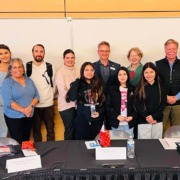
Suquamish youth engage with leaders at Kitsap Youth Forum
Suquamish youth joined peers from across the county at the 2026 Kitsap Youth Forum on March 19 at Olympic College in Bremerton, taking part in discussions with local leaders on issues affecting young people.
The annual forum provides a free space for youth and young adults to engage directly with decision-makers, share concerns, and learn more about local policy and community issues.
Attending from the Suquamish community were Nardine and Narmine Ridani, Genevieve Boure, Teylor and Charlotte Ives, and DeSean Santos. The group was accompanied by Family & Friends Center Director Barb Santos and Activity Coordinator Ryan Boure.
The forum created opportunities for youth to ask questions of elected officials, while also answering leaders’ questions in return, creating a two-way dialogue. Suquamish participants were especially engaged in discussions about youth homelessness, mental health, and safety.
“The youth came ready with thoughtful questions and a real desire to understand what resources are available and how systems are working to support them,” Santos said. “They were especially interested in how communities are responding to youth homelessness and making sure young people feel safe and supported.”
Tribal Council Vice Treasurer Josh Bagley participated as a panelist alongside other Kitsap County leaders, answering questions and sharing information about services available to tribal members and the broader community.
“Our youth were encouraged to hear that outreach teams are actively checking on people experiencing homelessness and helping connect them with services,” Santos said. “They also appreciated learning about counseling and family support programs that are helping bridge gaps for young people and their families.”
The forum reinforced the importance of youth voices in shaping community conversations and solutions.
“The biggest takeaway is that their voices matter,” Santos said. “They asked important questions, listened closely, and came away with a better understanding of both the challenges and the support systems that are out there.”
Tribe honors trailblazing leader Georgia George
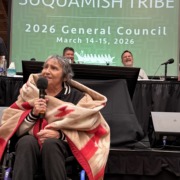
During the General Council gathering at Kiana Lodge, the Suquamish Tribe honored former Tribal Council Chair Georgia George in a ceremony recognizing her decades of leadership and service.
George was wrapped in a blanket by Calina Lawrence and Serene George as members of the General Council assembly looked on, many rising in support as the tribute unfolded.
Introducing the honor, Cultural Resources staffer Joey Holmes reflected on a time when the tribe operated with far fewer resources, recalling that George often traveled alone while representing her people.
“She was a major lobbyist and helped get the Rafeedie case across the finish line to establish treaty shell fishing rights. She did so much, she was awarded Person of the Year alongside Wilma Mankiller,” 30 years ago at the National Congress of American Indians conference, said Holmes.
In her remarks, George blended her trademark feisty humor with wise reflection. “It makes me feel old when I look at some of the existing Tribal Council members and know that I served with their mom and dad,” she said.
She spoke about the tribe’s growth over the decades, saying she has never seen the tribal community as “healthy, happy, and rich” as it is today, with strong cultural traditions, education systems, and health services in place.
“We couldn’t have done it without good leadership, without good community and tribal support, and without good employees,” she said.
George emphasized unity and the importance of continuing to dream and build together as a community.
“We can all achieve great things together as a tribe,” she said. “I have no regrets. I wouldn’t take back a minute of it.”
She also offered advice to future leaders.
“Stand up,” she said, “but always keep your humble roots.”
Grounding that message in culture, she encouraged younger generations to stay connected to tradition.
“Remember how to open up oysters and eat a raw clam,” she said. “Remember how to smoke some fish and eat the fish — especially the fish head!
In the Elders Kitchen, family is always part of the recipe
On a recent morning at the Elders Kitchen, the lunch plan changed on the fly.
Tamale pie was on the menu. Ground meat was already sizzling. Then the crew realized they were short on cornmeal.
No drama followed.
Head Cook Marie Sanders announced they needed to adjust the plan. Johnathan Old Coyote Bagley suggested enchilada casseroles. Pivot made. Assistant Cook Kathy Pondelick kept moving on her kale salad. Nearby, Bagley’s young daughter, Alice, colored with crayons at her own little table and got ready for one of her favorite jobs — helping her dad pack milk for the lunch deliveries.
It was a small moment, but it said a lot about how the kitchen works.
People step in. Plans shift. The work gets done. And more often than not, it happens with family close at hand.
That spirit has helped carry the Elders Kitchen into a new chapter since the retirement of longtime head cook Eanie Abler, whose years of service helped make the program a beloved part of community life.
Today, the kitchen is evolving under Ablers’ two daughters Sanders and Pondelick, as well as assistant cook and delivery driver Old Coyote-Bagley. Nina Old Coyote, who supervises the kitchen staff as part of her broader work overseeing the social services team, is also regularly in the kitchen helping where needed.
Hearts of service Human Services
Director Nehreen Ayub said that kind of teamwork is at the heart of the program.
“They just come and want to serve the Elders,” Ayub said. “They want to provide a nurturing, warm meal, and they do it with so much love.”
Ayub said the team has also helped breathe new life into the dining room itself.
“There’s a different vibe to it now,” she said. “We’ve already seen more Elders come because it feels fresh.”
That sense of welcome runs deep here.
Sanders is no stranger to the kitchen. She first began helping her mother there in 1999, shortly after moving back to Washington with her children. Over the years, she worked as a back-up cook while Abler became closely identified with the kitchen and its meals.
Now, with her mother retired, Sanders has stepped into the lead role herself. Her sister, Pondelick, has also worked in and around the kitchen over the years and has now been there full time for six years.
“We just found that groove,” Pondelick said with a laugh.
That groove seems to be paying off.
Secret Recipes
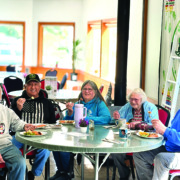
Indeed, the lunch program has seen a noticeable increase in participation in recent months. Where the kitchen once might have served a small handful of dine-in eaters on top of meals sent out for delivery for homebound Elders, Sanders said these days it’s not uncommon to see more than 30 eager Elders coming into enjoy a meal.
And not just Elders. The dining room is open to anyone in the community.
The price helps too. Meals are free for Elders 55 years old and up. For everyone else, it’s $5 a plate. It’s easy to see why Elders Kitchen is considered one of the best lunch deals around. But price is only part of the appeal.
“Our secret recipe is our team. We have fun, we do team building days, work on art together,” said Sanders. “We enjoy each other and we put that love into our food. And it shows.”
The dining room itself is also undergoing evolution.
The buffet line, once tucked away in the middle storage area, has been moved into the lunchroom itself. That shift has made the space feel less like a back-room pickup point and more like a shared meal.
Tablecloths now cover the tables. Artwork brightens the room. Affirmation cards and small touches from home give the space warmth. There is a puzzle table, monthly raffle prizes, and plans for a sitting area once an old piano is removed.
Moving the buffet into the dining space helped change the flow of the room — something Sanders said even comes down to feel. “It just has better feng shui,” she said, laughing. “It feels more like a family-style dining space.”
Nina Old Coyote has been part of that effort too, helping shape the room’s atmosphere and stepping into the kitchen as needed. She said she tries to pitch in regularly, whether that means helping pack meals, giving the crew an extra set of hands chopping fresh veggies, or whatever it takes.
Ayub said the changes have been driven in part by Old Coyote and Sanders working together to update the space and make it feel more inviting.
“I feel like I see their passion in all these recent upgrades,” Ayub said.
Some of the changes are practical. Others are about attitude.
Waking the kitchen
Each day begins with what the staff calls “waking up the kitchen” — turning on the dishwasher, ovens and warmers, readying the workstations, and finally taking a deep breath before the day begins.
“We just take a deep breath and focus on work and leave the rest at home,” Pondelick said. “Do one thing at a time, focus on that. And before you know it, you’re feeling good.”
“It’s all about bringing good energy,” Pondelick said. “I’ve always heard not to cook or make food with an angry heart.”
The work itself is divided in a way that plays to each person’s strengths. Sanders handles the main dish. Pondelick makes salads and dressings. Old Coyote-Bagley has become the kitchen’s baker, turning out cornbread, cookies, cakes and biscuits with what Sanders called an effortless touch.
Then there is little Miss Alice.
She comes in several mornings each week, colors at her little table, counts bowls and helps pack milk for the delivery route.
“We have raised up several kids in the kitchen,” Sanders said. The family connections go even further.
Abler’s recipes still live in the kitchen’s well-worn recipe box and folders, alongside handwritten notes from other cooks and helpers who have shaped the meals over the years. Old Coyote-Bagley’s grandmother once worked there as a baker. He credits her influence on what Sanders describes as his “magic touch” as a baker.
“All of us have our families intertwined in this kitchen,” Sanders said. That sense of continuity matters, especially during a time of change.
No one in the kitchen speaks of replacing Abler. Her influence is still there in the recipes, in the room and in the habits the team continues. One corner still holds the puzzle table she loved. The kitchen still serves longtime favorites tied to her name.
But the next chapter is taking shape too.
Ayub said the team’s work can be easy to overlook, even though it matters deeply to the people it serves.
“That whole crew is amazing, but they are all-too-often unsung heroes,” she said. “It’s easy to miss because it happens behind the scenes, but the work they do really matters.”
In the Elders Kitchen, that work looks like lunch.
But it also looks like family, care, memory, and the daily, diligent effort of making people feel welcome when they walk through the door to enjoy something delicious.

Working together behind the scenes to create, connect, celebrate
Within the Suquamish Tribe, our gatherings — like Canoe Journey, Chief Seattle Days, the Renewal Powwow, and other seasonal celebrations — are more than just events. They’re a time for our community to come together, connect, and celebrate our culture and traditions. Behind the scenes, it takes a lot of teamwork to make these events safe and enjoyable for everyone. That’s where Emergency Management comes in — we help bring departments together and coordinate efforts so the community can focus on enjoying the event. We do this by creating a clear structure for planning and coordination, giving everyone a system to work within so things stay organized and run smoothly.
When we host large events, there are more people, more traffic, and a lot of moving pieces. Planning ahead and working together is what helps everything run as smoothly as possible.
Emergency Management supports this by coordinating resources, making sure the right people and equipment are in place, and keeping communication flowing between departments and with the community. We also plan for things like medical situations, severe weather, crowd movement, and other unexpected issues that can come up.
By working closely with other departments, we help reduce confusion and redundancy, and make sure everyone knows their role if something happens. Our cultural and community events don’t happen on their own — they’re made possible through strong partnerships.
Among just a few of the departments Emergency Management works close with:
- Cultural Resources Department who are the leads and backbone of these events
- Public Safety for security and emergency response
- Facilities & Maintenance for setup and site readiness
- Communications to keep everyone informed
- Community Health for medical support
Each department brings important knowledge and experience, and together we build a plan that supports both safety and a successful event. One of the main tools we create is an Event Action Plan, which helps everyone stay organized and prepared. These plans outline roles and responsibilities, how we communicate, what to do in an emergency, site layouts, and key contacts so teams can quickly connect and respond if needed.
This teamwork doesn’t just stay on paper — it happens in real time at every event. Whether it’s managing traffic, supporting facilities, or working through an unexpected issue, departments are working side-by-side the entire time. Things don’t always go perfectly, and that’s okay. Because we have strong relationships and clear plans in place, we’re able to quickly work through any challenges together using communication and teamwork.
The success of our events reflects the strength of these partnerships and the dedication of the departments. When departments plan together, communicate clearly, and support one another, we create safer and more enjoyable experiences for everyone.
Emergency Management is proud to work alongside our tribal partners — because when we plan together, we protect what matters most: our people, our culture, and our community.
Fitness Center wraps busy winter season with strong youth and Elders programs
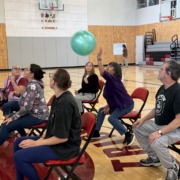
Staff stayed active with youth and adult basketball while continuing twice-weekly Elders fitness classes. Tuesday sessions for Elders focused on stretching, walking, and a variety of exercises, while Thursdays feature our weekly favorite, Elders Volleyball.
BASKETBALL SEASON KEEPS GYM HOPPING
Sports & Rec staff worked with youth of all ages during a fun and fast-paced basketball season, coaching about a dozen teams. The junior high girls league served double duty this winter, preparing players for their school basketball season. Their hard work paid off, with every participant making their school team.
Staff then moved into their busiest stretch, managing weekday and weekend games across two leagues. The Kitsap Peewee League included five teams: coed ages 5–6 (EE level), girls age 7 (E level), boys age 10 (C level), girls age 10 (C level), and boys age 13 (A level).
BIG WINS ACROSS THE BOARD
All peewee teams had strong seasons. From first-time players scoring their first baskets to returning athletes building new skills and sportsmanship, each team found success.
The E level girls finished with just three losses on the season, while all other teams advanced to the playoffs. The C boys and A boys each placed third in the county. The C girls advanced to the championship game, finishing second after a hard fought contest.
Four teams also competed in the Poulsbo Parks & Rec League, including 2nd–3rd grade boys and girls teams and 5th grade boys and girls teams. These groups focused on skill development and learning the game, with no playoffs or championships. All competed well and enjoyed their time on the court.
Several teams also participated in tournaments throughout the winter, including Girls 12U AAU, Boys 8th Grade AAU, and multiple tribal tournaments.
The winter season remains the busiest time of year, with practices and games five days a week, both at the Fitness Center and at gyms across Kitsap County.
Staff are proud of all youth who participated this season, from experienced players to those just learning the fundamentals of dribbling, passing, and shooting. Each athlete showed growth not only in basketball skills but also in teamwork.