


Tribal offices are closed through Jan. 1. For urgent help during the winter break, tribal members and their families may call:


To Suquamish Tribal citizens, families, and staff,
Climate change has affected us all in many ways. Summers are much hotter, and rising water temperatures threaten our ecosystems. I’m writing to you because of our need to take action here in our homeland as the impacts of climate change inevitably get worse. Federal and state government, local utilities, private foundations, and intertribal organizations have funding available to invest in climate change adaptation and carbon reduction strategies. These opportunities mean our tribal nation could get the resources we need to assure our tribal nation survives, and even thrives, as this crisis unfolds.
To do this, we need your help.
From tribal citizens, we need your input. We will be setting priorities as part of the planning and implementation of climate solutions that will impact our community for years into the future. We need to know what is important to you, how you want to see things change, and where you don’t want to see things change as we respond to this crisis. Your input will help us create a plan that will best serve our tribal families for generations to come. Please respond to requests from the team working on this project on behalf of the Suquamish Tribe.
From tribal staff, we need your active participation in carrying out these priorities. The climate crisis will affect virtually everything we do as a tribal nation. We plan to focus on reducing our own carbon footprint and on building our resilience so we can survive and thrive in spite of the changes in temperature, ocean conditions, economics, well-being, health, and so on. Solar panels and electric vehicles are familiar opportunities, but there are other actions we can pursue, and we look forward to your suggestions as well.
Our Office of Emergency Management in collaboration with the Treaty Rights Division is taking the lead on this planning, but they will be calling on many others to be part of this process. I ask that you respond when asked and help do the necessary planning and implementation.
Our goals are both to prepare our nation for this unfolding crisis, and to tap the federal resources now available that can help us reduce our climate footprint and prepare to weather the coming storms.
Sincerely,
Leonard Forsman

Chief Kitsap Academy is showcasing Suquamish Tribe’s traditional values with a modern twist at the school’s new Carving Den. Thanks to a $39,000 grant from Puget Sound Energy’s Green Power program, the academy’s new solar array is now online, illuminating the way towards a greener future while honoring age-old traditions.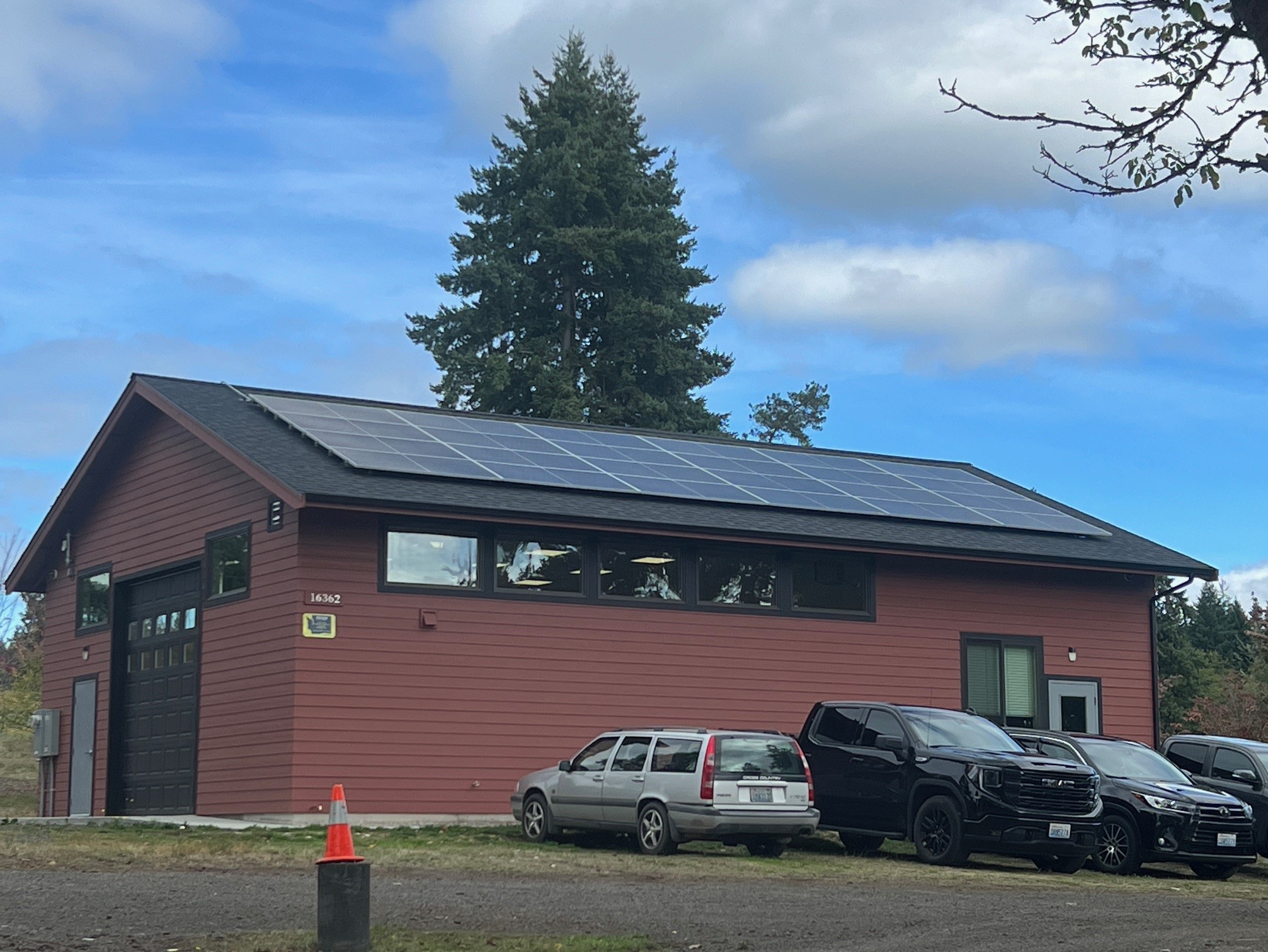
This cutting-edge addition to Chief Kitsap Academy’s campus comprises solar panels that harness the power of the sun, providing clean energy totaling 11.8 kilowatts. The array is not only another practical symbol of sustainability, but also serves as a tribute to the tribe’s rich cultural heritage, where respect for the environment has been ingrained for generations.
“The Suquamish Tribe is proud to partner with PSE to illuminate our Carving Den through the power of the sun,” said Brenda Guerrero, Director of the tribe’s Education Division. “This endeavor aligns with our traditional values of environmental stewardship, where we strive to care for our lands and resources as our ancestors did. It’s a testament to our commitment to a sustainable future for our community and the environment.”

The Suquamish Tribe has been at the forefront of adopting solar power in Kitsap County. Last year, the tribe installed its first solar array at the Family & Friends/Fitness Center complex with another PSE grant. Applications are in the works for several additional solar projects across tribal government.
The Carving Den serves as a space where students, staff, and tribal community mentors come together to learn and preserve traditional carving techniques. “The integration of solar power underscores the idea that tradition and innovation can coexist harmoniously, highlighting both our adaptability and resilience,” said Guerrero.