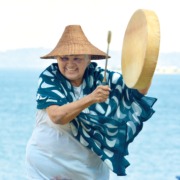
Boarding School Survivor Peg Deam shares her story

Healing requires restoration of culture, language – and land

When Suquamish Elder Peg Deam was approaching junior high school age, she was sent off to the Chilocco Indian Agricultural School in Newkirk, Oklahoma.

“Nothing prepares you for this experience,” she said. “You have no family. You’re just floating out there, trying to survive and get through each day.”

Peg’s life was regimented. Indian languages were forbidden. The food was poor quality. Any sign of Native culture or ceremony was forbidden.

According to the National Native American Boarding School Healing Coalition (NABS), the school was modeled after the Carlisle School in Pennsylvania, which used “rigorous military discipline and instructions in trades and manual and domestic labor.”

“I thought, this must be what a juvenile delinquency center is like,” said Peg. “Everyone was treated badly.”

Peg’s experience at Chilocco was much like many other Indian children who spent months or years in similar schools, supported by the U.S. government and often run by a church denomination. According to a new report by NABS, there were 523 such schools operating between 1801 and the present.

Children at many of the schools were treated poorly. Like at Chilocco, they were prohibited from speaking their language, and many were physically or sexually abused. Many children attended these schools against their parent’s wishes, brought there when parents were coerced or when children were simply kidnapped.

Many never returned. According to a recent report by the Bureau of Indian Affairs, marked and unmarked burial sites have been identified at 53 federal Indian schools, and many more are expected to be revealed as further research is conducted. Nineteen schools accounted for over 500 deaths of American Indian, Alaska Native, and Native Hawaiian child deaths, according to the report.
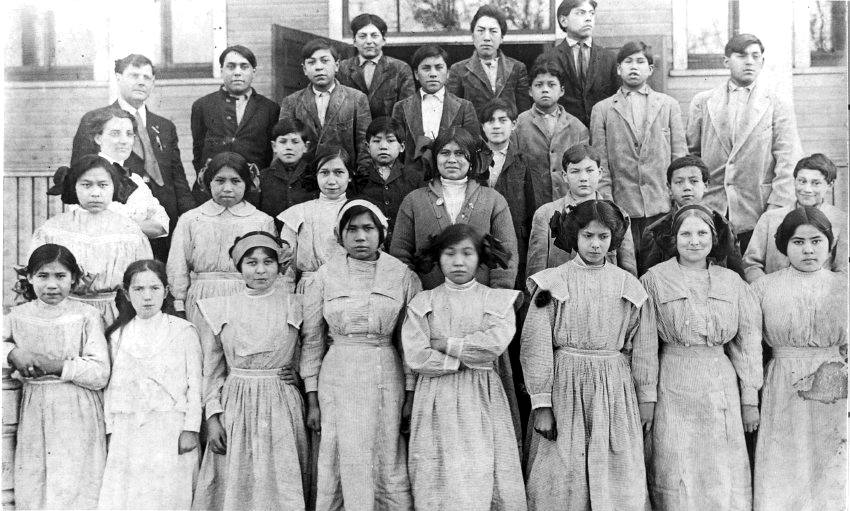
Many Suquamish Tribal members attended the Tulalip Boarding School. (Photo courtesy of the Suquamish Museum.)

Peg recalled some of what she witnessed at Chilocco. Diné children, many of whom did not speak English, were punished for failing to immediately follow orders they did not understand, she said.

Some of the Sioux boys would pretend to be drunk, knowing they would be handcuffed to the cots in a room together, she said. While there, they were able to secretly speak their language and teach each other traditional songs.

One girl, having learned that her grandfather had died, wanted desperately to conduct the ceremonies necessary when a loved one passes. Her roommates, and girls throughout the dorm, came up with a plan to make that possible. They staged a fist fight on the other side of the building, distracting the matrons long enough to give the girl time to do the necessary rituals for her grandfather.

“We were so proud of each other and especially proud of her,” Peg said. “In an overwhelming situation, she carried on with her culture. I will never forget that.”

Boarding schools and land grabs

It’s long been known in Indian Country that the boarding school policies of the US government were cruel, destructive of Indian ways of life and of families, traumatizing, and did lasting damage to the language and ancestral knowledge of many diverse Native cultures of North America.

The Department of Interior report also demonstrates that the boarding school policy was aimed at taking the land of Indian people so it would be available for white settlers to farm and extract resources.

“Beginning with President Washington, the stated policy of the Federal Government was to replace the Indian’s culture with our own. This was considered ‘advisable’ as the cheapest and safest way of subduing the Indians, of providing a safe habitat for the country’s white inhabitants, of helping the whites acquire desirable land, and of changing the Indian’s economy so that he would be content with less land. Education was a weapon by which these goals were to be accomplished.”

The history of land grabs on the Port Madison Indian Reservation shows how the taking of land coincided with the forcible removal of Suquamish children from their families.

According to Suquamish Chairman Leonard Forsman:

  • In 1886: the approximately 8,000-acre reservation was divided into 51 allotments assigned to family “heads.”
    Beginning in 1900: Suquamish children were forced to attend Tulalip Boarding School.
  • In 1904: The U.S. military seized the Old Man House village site where Suquamish people had built their homes, school, church, after the military ordered the burning of Old Man House, former home of Chief Seattle and Chief Kitsap in 1870. The military seized approximately 70 acres of Suquamish waterfront, all in the name of building fortifications to protect the Bremerton shipyard. The fortifications were never built. Instead, the waterfront land was sold to developers who subdivided it for vacation homes for white people. (The deed to those homes prohibited their sale to anyone who was not Caucasian.)
  • Circa 1905: Federal government passed law allowing tribal allotments to be sold at auction on behalf of the allottee (resulting in checkerboard reservation)

The timing of these events was not a coincidence, according to Forsman. “Healing begins with a reckoning of what took place, and that means full disclosure, acknowledgment and reparations through land restoration,” Forsman said. As a result of action by Suquamish Tribal Government, more than half of the Port Madison Indian Reservation is now owned by the tribe or by tribal members. The tribe is also supporting the establishment of a national Truth and Healing Commission on Indian Boarding Schools.

Restoring culture and art
 

For Peg Deam, a main focus has been on restoring Suquamish culture and art.


Deam refused to return to Chilocco after her first year there, instead attending the Institute of American Indian Art (IAIA) in Santa Fe, New Mexico. There, the mostly Native American teachers taught students to embrace their cultural heritage and to learn all they could about their ancestral practices, adding their own creativity to bring their art, writing, theater, and crafts into the present. IAIA, in other words, was the opposite of the Indian boarding schools; instead of punishing children for practicing their culture, cultural practices were taught and encouraged.


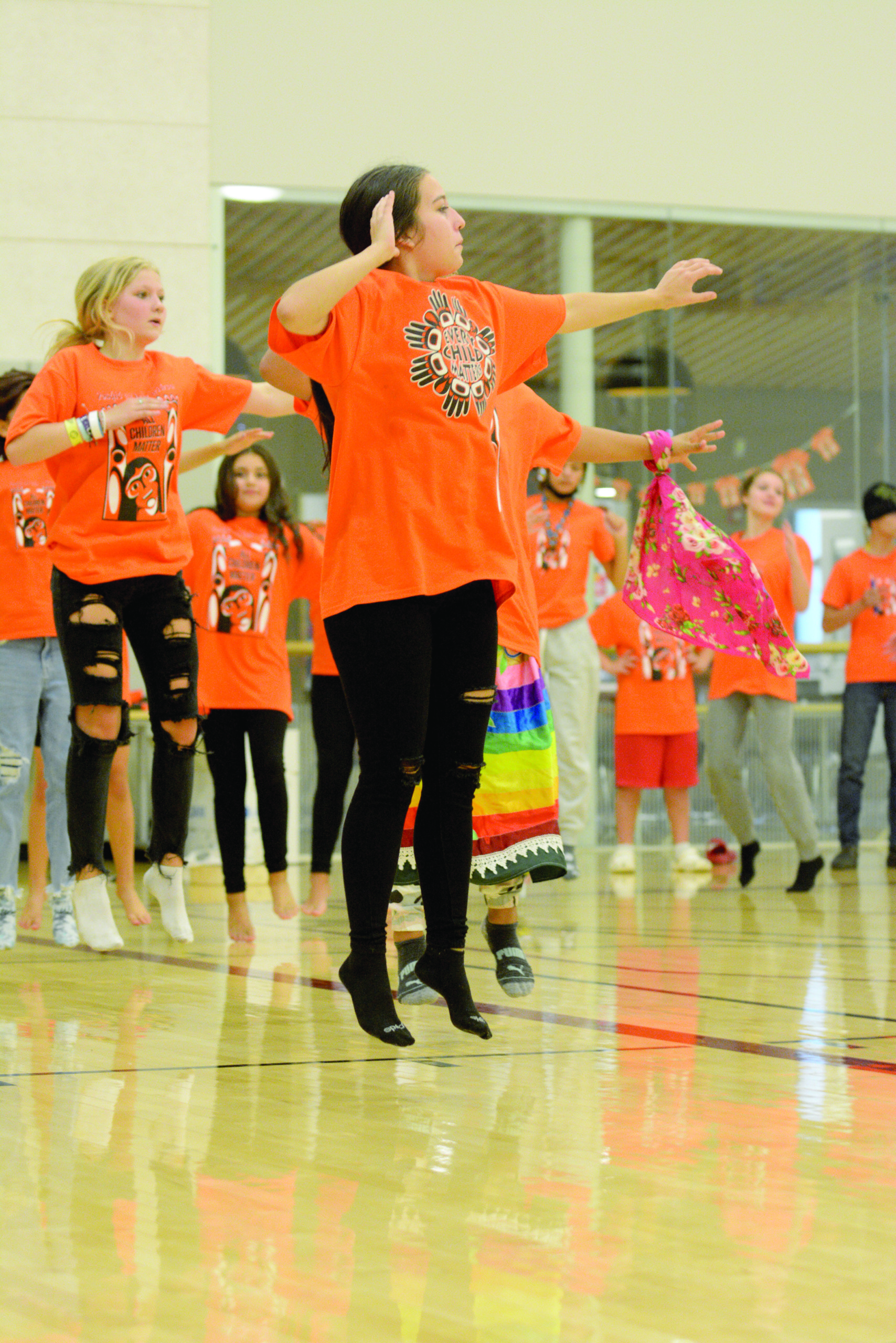
Deam is just one of many who resisted boarding school efforts at assimilation, instead embracing her culture. And today, Suquamish is among the communities remembering the hardships of boarding schools; Orange T-Shirt Day will be remembered with a Coastal Jam at the Old Tribal Center on Sept. 29, 2023.
By Sarah van Gelder

A picture of Healing House, where Community Health is co-located.

Healing House Primary Care Expands Eligibility

Suquamish Tribe Healing House Primary Care Clinic is now accepting new patients from the following groups:

  • Suquamish Tribal Members and their families
  • American Indian/Alaska Native tribal members/descendants enrolled in other federally recognized tribes
  • Suquamish Tribal Government staff and their families
  • Port Madison Enterprises employees and their families

For these patients Primary Care accepts any insurance. Primary Care is also now accepting anyone with Medicaid.

Primary Care is currently at capacity for all other patients with private insurance and Medicare.

All patients must provide proof of insurance.  For American Indians/Alaska Natives without insurance, please call the clinic for Medicaid enrollment assistance.

For more information regarding eligibility and new patient registration, please contact the Healing House reception desk at (360) 394-1350.

Justice Gorsuch opinion in ICWA ruling is worth reading

Supreme Court Justice Neil Gorsuch offers a masterclass on tribal sovereignty in his concurring opinion offered in the court’s recent decision to uphold the Indian Child Welfare Act.

“In affirming the constitutionality of the Indian Child Welfare Act (ICWA), the Court safeguards the ability of tribal members to raise their children free from interference by state authorities and other outside parties. In the process, the Court also goes a long way toward restoring the original balance between federal, state, and tribal powers the Constitution envisioned,” he writes in a 43-page opinion.

“I write separately to add some historical context. To appreciate fully the significance of today’s decision requires an understanding of the long line of policies that drove Congress to adopt ICWA. And to appreciate why that law surely comports with the Constitution requires a bird’s-eye view of how our founding document mediates between competing federal, state, and tribal claims of sovereignty.”

Click here to read his analysis in full.

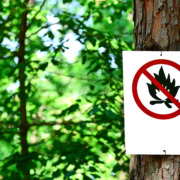
Burn ban now in effect

Wildfire risk rising

The Suquamish Tribe, in cooperation with the Kitsap Fire Marshal, has declared a Phase 1 Burn Ban on the Port Madison Indian Reservation starting immediately. The ban, which limits most outdoor fires, is in effect until further notice.

Under a Phase 1 ban, all outdoor burning is prohibited except for:

  • Small recreational fires
  • Cooking
  • Ceremonial fires

Permitted fires must be kept within approved devices and safe locations. Open recreational fires must be:

  • Located at least 25 feet from any structures
  • Contained within a designated fire pit less than 3 feet in diameter
  • Not exceed 2 feet tall
  • Not be used as a substitute for burning yard debris

With an early start to the fire season in western Washington, local fire districts are seeing an increase in fire responses.

Higher than normal temperatures are likely to continue and lower than normal amounts of rain are predicted over the next few weeks, worsening fire risk in a landscape that’s already dry.

Escaped outdoor fires are the leading cause of wildfires, sparking nearly 85% of all blazes.

For information on burn permits please visit the North Kitsap Fire and Rescue Outdoor Burning Information page

For further information regarding the burn ban please contact Eric Quitslund, Office of Emergency Management Operations Officer, at equitslund@suquamish.nsn.us.

A statement from Suquamish Tribal Council on Brackeen v Haaland Supreme Court Decision

The Supreme Court decision upholding the Indian Child Welfare Act (ICWA) is an affirmation of Tribal sovereignty and the rights of Indian nations to raise our children and the next generation of citizens and leaders.

The Indian Child Welfare Act protects our children, families, and communities from earlier government-sanctioned practices of family separation. Forced attendance at boarding schools – along with child welfare practices that removed children from parents, extended families, and tribal communities – have traumatized our people.  This was a deliberate federal policy of assimilation designed to eradicate our culture and dispossess our land.

With today’s ruling, the majority of Supreme Court justices stand with us – along with child welfare advocates and legal experts – in understanding that we as tribal communities have the right to raise our children.  The Supreme Court also reminded the states of the unique legal and political relationship between Indian Tribes and the United States Congress.

The Supreme Court’s ruling on Thursday, June 15, in Brackeen v Haaland should put to rest questions about the future of ICWA legal protections for our families.


May is Mental Health Awareness Month

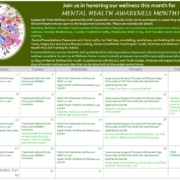
The Suquamish Tribe’s Wellness Center has a slew of events planned for Mental Health Awareness Month through May. All activities are open to the Suquamish Community.

Here’s a round-up of what’s coming up:

Weekday Wellness Activities: Each weekday of the month of May join us in connecting with ourselves and culture to support our wellness. Monday Meditations, Tuesday Traditional Crafts, Wednesday Walk or Jog, and Thursday Canoe Journey Giveaway making.

Events/Presentations: Please join us in food, crafts, fun field day, storytelling, workshops, and training this month. Frybread Tacos, Happy box and aroma therapy making, Seven Grandfather Teaching for Youth, Nutrition and Wellness Talk, and Mental Health First Aid Training for Adults.

Personal Wellness Journey Booklet: Self-guided booklet utilizing evidence-based and cultural-based practices to support holistic wellness (available for pick up at Wellness Center or electronically at request via email to oponce@suquamish.nsn.us)

31 Days of Mental Wellness for Youth: In partnership with the ELC and Family & Friends Center, Wellness will support both agencies in a 31 days of mental wellness activities that can be done both at the centers and at home.

Check out the May Wellness Calendar for more details.

Grant funding helps CKA students through pandemic challenges

Chief Kitsap Academy is putting $125,000 in federal grant money to good use with new computers, school supplies, and a staff counselor focused on easing attendance and adjustment challenges among students as the school emerges from the pandemic.

The funding comes from the U.S. Education Department’s Elementary and Secondary School Emergency Relief Fund, or ESSER for short, part of a $123 billion in emergency financial assistance provided to public school districts across the country last year.

Chief Kitsap Academy is using ESSER funds to support student learning recovery and acceleration by purchasing student computers for home and school use, purchasing supplies for Summer School, as well as restocking protective supplies including masks and hand sanitizers.

Meanwhile, as part of the grant, Ashley Kennedy – who previously worked for the Suquamish Tribe Wellness Center – is now helping students with the social and emotional transitions that have come with being back in the classroom.

If you have any questions, contact CKA principal Rex Green at (360) 394-8597.

Healing House Clinic set to open this winter

Tribal members invited to open house slated for Jan 5

The Primary Care team at the Suquamish Tribe’s Healing House health clinic is on track to begin seeing patients by the end of the winter, says Dr. Kristine Ewing, the clinic’s medical director.

In December, the clinic’s new staff began training on the new Electronic Medical Record (EMR) system that will be used by the entire Health Division (Healing House, Wellness Clinic, and Community Health), marking a major milestone towards fully opening the clinic. Having a single EMR across the Tribe’s health entities will help to coordinate and streamline care.


“We are busy orienting nursing and administrative staff, ordering supplies, and learning our new medical record system,” said Ewing. “We need everything to be ready in a good way, so that we can do what we are here to do, which is caring for people.”

Tribal Members and their families are invited to an open house at the clinic on Jan. 5. Tours will begin for Tribal Elders only at 1pm. Tours will continue for everyone else from 2pm to 4pm.

In the meantime, clinic staff are now assembling a list of Tribal Members and their families who are interested in making appointments to establish their medical care at the clinic.

“These first appointments are typically longer visits where your doctor will review your medical history, ask you a lot of detailed questions, and start to develop a plan that meets your medical needs,” said Ewing. “For now, we’re just trying to get a sense of who is interested. Once we’re ready to schedule appointments, we will contact you.”

This might beg the question – what will primary care look like at the Healing House?

“And it’s a good question,” says Ewing. “Primary care is a long-term relationship between a person and a primary care physician. In our Tribal community, this all about establishing a relationship built on trust and respect, the kind of care that comes with honoring culture and taking the time to understand each person’s unique needs.”

Dr. Alex Kraft, who is a Naturopathic Physician and acupuncturist who worked part-time at the Wellness Center over the past eight years, joins Ewing, a Family Physician, on the Healing House Primary Care team.

At the Healing House, these primary care doctors will see patients regularly for checkups, taking time to get to know a patient and their medical history, and provide knowledge and support regarding long-term and chronic health concerns, including nutrition, stress management and mental health.

“Ideally we would see people for all of their primary care and also acute, non-life-threatening needs, but as a primary care clinic we will often refer more urgent concerns to an urgent care clinic or emergency room,” says Ewing.

Getting the final pieces in place

Before visits can begin, however, several remaining big, background pieces are being put into place.
Tribal Council recently approved the eClinicalWorks EMR as the Tribe’s backbone for recordkeeping and secure client communication. Training to use that software, now underway, is about a two-month process.
Tribal Council also approved a contract with Native American-owned DT-Trak Consulting to provide coding, billing, auditing, and credentialing services for health clinic staff. Meanwhile, joining Ewing and Kraft, three new staff members have been hired into key positions at the clinic in recent weeks:

  • Receptionist – Elizabeth Napoleon
  • Medical Assistant – Michelle Hofmann
  • Office Manager – Kris Safford

Stephen Kutz serves as the Healing House Director, overseeing Primary Care, Community Health, and the Wellness Center.

As the Primary Care team continues their work to prepare to see patients, the Tribe’s Community Health nursing staff continue providing vaccinations and boosters, COVID-19 testing, medication and chronic disease management, tobacco cessation, and nutrition counseling, among other services.
WIC services are also now run out of Healing House.

By Jon Anderson