Suquamish Welcomes New CEO to Port Madison Enterprises

Longtime hospitality executive Sam Askew returns to Port Madison Enterprises
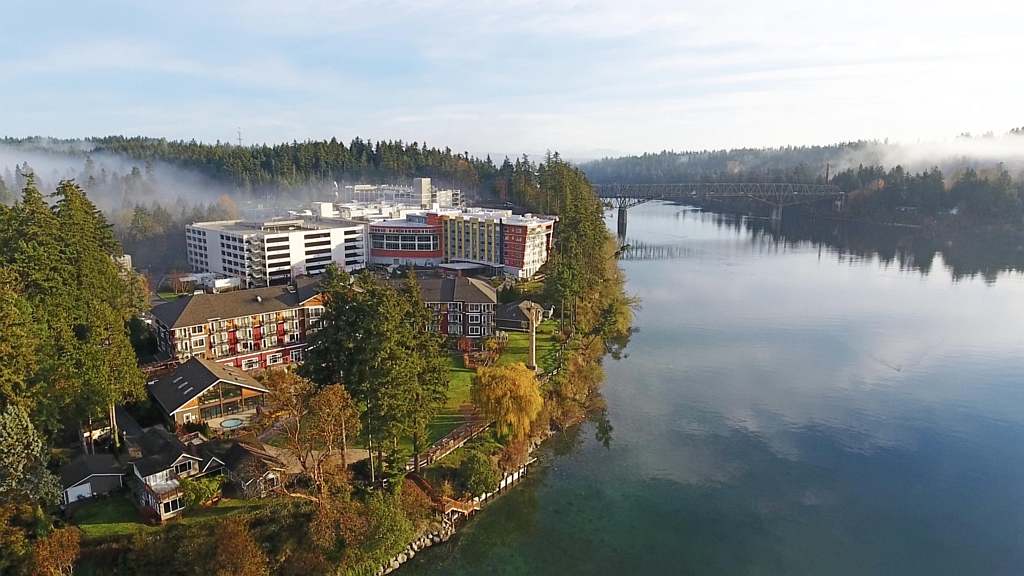
The Suquamish Tribe’s waterfront Clearwater Casino Resort is the flagship venture of Port Madison Enterprises.

SUQUAMISH, WA- February 2, 2018 The Suquamish Tribe is pleased to announce the selection of Samuel Askew as the new Chief Executive Officer of Port Madison Enterprises (PME).

“After an extensive search, we chose Samuel Askew for his experience and vision. We look forward to future growth and success with Samuel at the helm of our daily operations,” said Port Madison Enterprises Board President Greg George.

Askew brings nearly two decades of experience building and managing hospitality ventures in the Pacific Northwest to PME. He replaces retiring CEO Russell Steele, who spearheaded business operations at the Suquamish Tribe’s enterprises for 17 years.

“I want to congratulate Samuel Askew on his new role as head of PME, and thank the PME Board for their diligent efforts in making this important decision. Samuel is familiar with our Tribe, and we know he can help us grow our economic future in a diversified manner,” said Suquamish Tribal Chairman and Affiliated Tribes of Northwest Indian President Leonard Forsman.
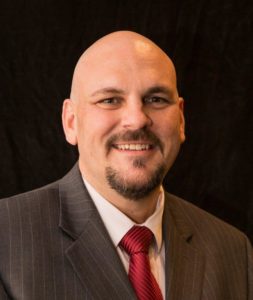
Samuel Askew, new CEO of Port Madison Enterprises

The move to Suquamish is a homecoming for Askew. From 2006 to 2011 the hospitality veteran managed PME’s waterfront hotel, Clearwater Casino Resort, where he was named Washington State General Manager of the Year by the Washington Lodging Association and Innkeeper of the Year by the Kitsap Peninsula Visitor and Convention Bureau in 2010.

“I’m honored to have the opportunity to return to the area, and tribal community; leading teams of professionals throughout PME that I have a great respect and care for. It’s great to be home again!” said Askew.

For the past 7 years, Askew has managed operations at Tulalip Resort and Casino. He has also served as co-chair for Northwest Tribal Tourism and held executive positions at the Squaxin Island Tribe’s Little Creek Casino Resort, Alderbrook Resort and Spa, and Riverhouse Resort. Before beginning his career Askew studied Hotel and Restaurant Management at Northern Arizona University’s Hospitality School.

About Port Madison Enterprises
In 1987, the Suquamish Tribe established PME as an agency of the Suquamish Tribal Government. PME’s operations are aimed at developing community resources while promoting the economic and social welfare of the Suquamish Tribe through commercial activities. What began as a modest retail endeavor has grown exponentially over the last three decades.  PME now encompasses several businesses including Suquamish Clearwater Casino Resort, the historic Kiana Lodge, three retail outlets, White Horse Golf Course and a property management division. For more information about PME, visit them online at www.portmadisonenterprises.com

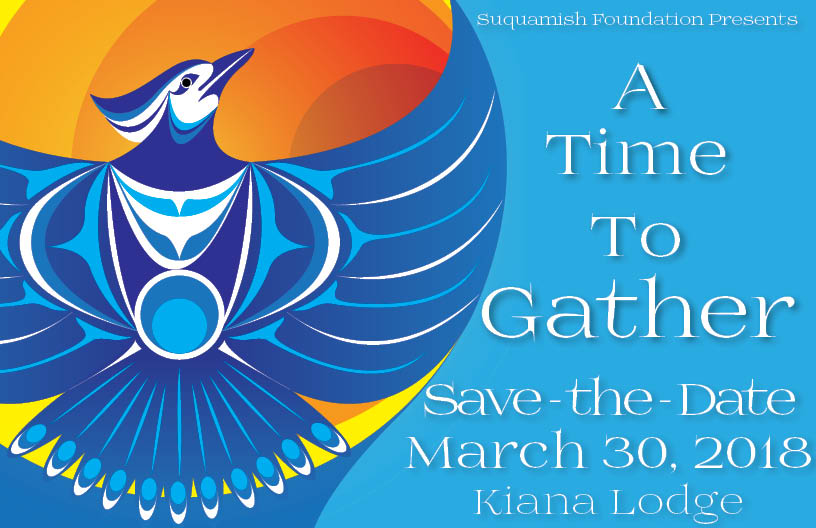
Suquamish Foundation Announces Date for Time to Gather

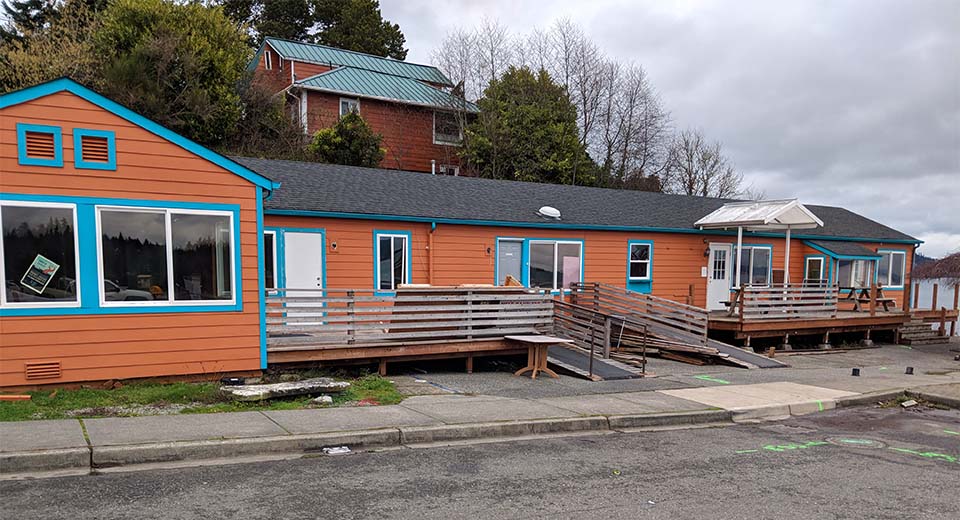
Please join us at the beautiful Kiana Lodge on Agate Passage for a springtime evening rich with friendship, fun, great food, music and entertainment and our exciting, signature auction event on Friday, March 30, 2018. Our auction features original traditional and contemporary Native art as well as our unique cultural experience items such as a local archaeology tour, an indigenous food cooking class or a canoe voyage around Agate Passage.

Our inspiration this year is the Blue Jay Saves the Sun. This Suquamish story signifies the audacity, altruism and courage of an individual whose passion is to cultivate and benefit the place and people of his beloved home. To dedicate, with heartfelt determination, and even an element of playfulness, the will to surmount all obstacles to bring light and prosperity to the home and community that you revere and love.

It is in this spirit that we joyfully focus our fund-raising efforts this year on the building of a community playground and cultural park based on Suquamish stories and legends in the Suquamish Shores area. As this land is being returned to Suquamish ownership this Spring, it is our commitment to transform it into a place that reflects the health, beauty, traditions and community spirit of our treasured homeland.  A place for families that can enrich everyone.

Thanks to the generosity of those who participated in our annual event in the past and are involved this year, we are able to continue to strengthen the cultural resurgence of the Suquamish Tribal community as well as the friendships of our fellow non-profits, neighbors, and visitors. We will journey into the future by honoring the past and we guarantee a payback of a brighter future to share.

The Suquamish Foundation is the non-profit arm of the Suquamish Tribe, created in 2005, and dedicated to supporting the culture, education, environment, health and vitality of the Tribal community and its’ neighbors.  We completed the inspiring Building for Cultural Resurgence capital campaign that built our Suquamish Museum, Community House, Early Learning Center, Veteran’s Memorial, Health and Fitness Center, Community Ball Field and Community Dock. And we award over $300,000 annually to schools and non-profit organizations that serve Kitsap County.

To purchase tickets to our annual fundraising event, visit the foundation online by clicking here or contact Margeaux Lewis at mrlewis@suquamish.nsn.us or by phone at (360)394-8453. Tickets go on sale by February 1, 2018.

New Vendor Friendly Area to Replace Aging Building Along Suquamish Waterfront

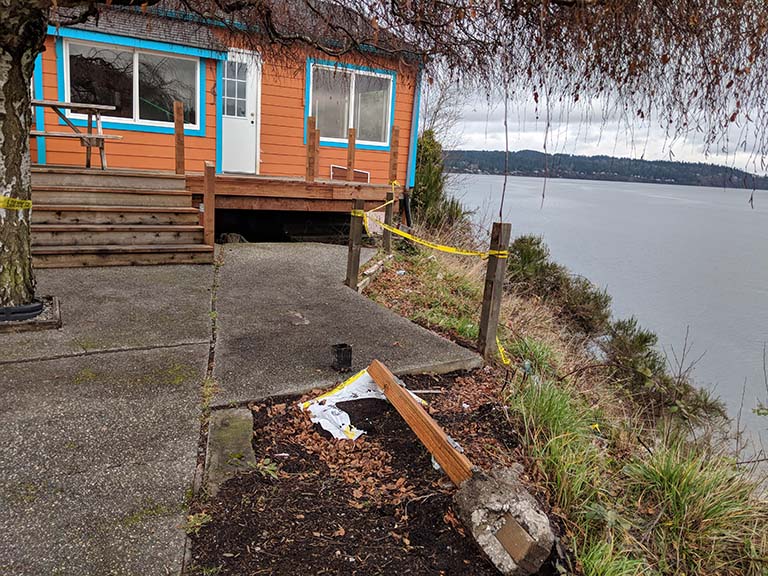
The building, often referred to as the “Barnacle Building” will be demolished in late January, 2018.

Demolition of the waterfront building located at 18408 Angeline Avenue in Downtown Suquamish will begin later this month. Work to raze the aging structure, formerly home to Scratch Kitchen and Bella Luna restaurants, is scheduled to start on January 22, 2018 and is expected to take a week to complete. Port Madison Enterprises (PME) owns the property, and made the tough decision to remove the building after an assessment last year.

The side of the building faces a steep cliff on the waterfront in Downtown Suquamish. Though the building will be torn down, PME is taking steps to ensure the unique tree near the entrance remains on the property.

“The building’s location on the cliff, its’ age and condition were all factors in the decision. We just aren’t able to salvage the structure,” said PME Board of Directors Member Windy Anderson.

After demolition, PME plans to create a covered, open space area on the property to be used for multiple vendors, including those selling food items.

“Hopefully we will be able to utilize the space to provide the community with multiple food choices by late summer,” added Anderson.

Though the building is slated for demolition, the Suquamish Tribe Archaeology and Historic Preservation Program has been tasked with ensuring the history of the property is recorded. During the last 50 years, it’s been a restaurant, a coffee cantina, a head shop, an art studio, an apartment complex and a private residence. Property records indicate the building was constructed in 1948 and originally used as a hotel for travelers. However, there is some debate about whether the building was built on the property, or ferried over by barge from Seattle, WA.

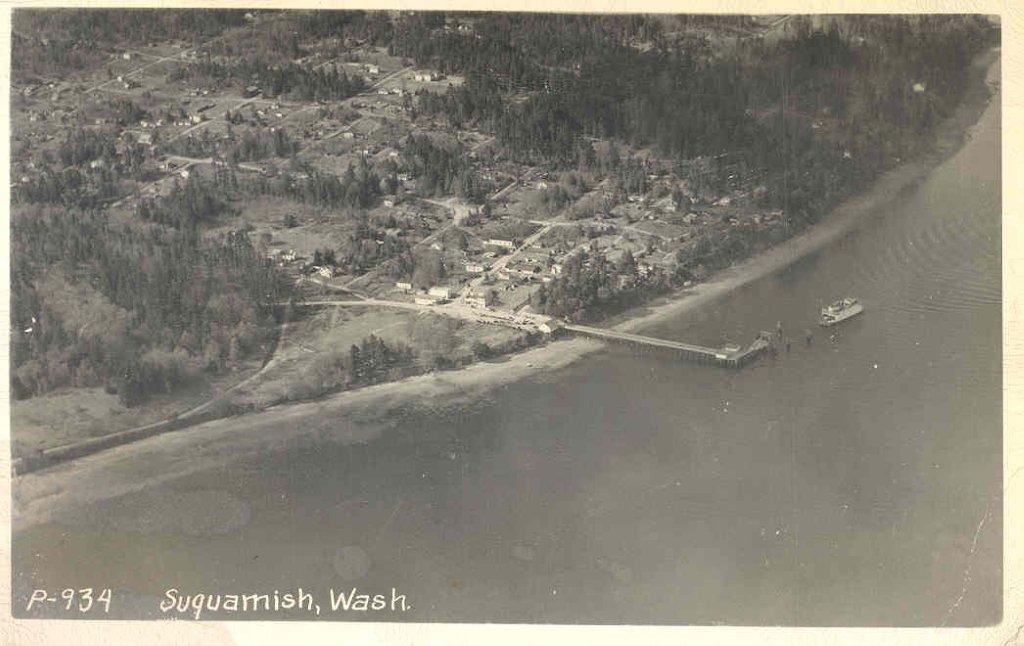
An aerial photograph of the Suquamish Waterfront cir. 1930, detailing the location of the old Suquamish Ferry Dock and Ticket Booth, shows the undeveloped property where the building would later be located. Courtesy of the Suquamish Museum archives.

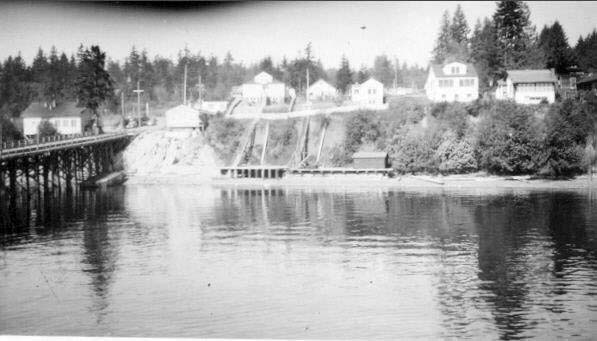
A photo of the Downtown Suquamish waterfront estimated to be taken in the 1950s’, where the building can be viewed next to the old Suquamish Ferry Dock.

“Unfortunately, this is an era where we don’t have a lot of information in our archives for those properties. During the early decades of the 1900s the federal government aggressively implemented assimilation policies, including land allotment policies that allowed reservation property to be sold out of Tribal member ownership.  BIA Agents used discriminatory regulations that declared Tribal Members non-competent giving them the access to sell lands, mostly large waterfront parcels like downtown Suquamish,” said Traditional Heritage Specialist Marilyn Jones.

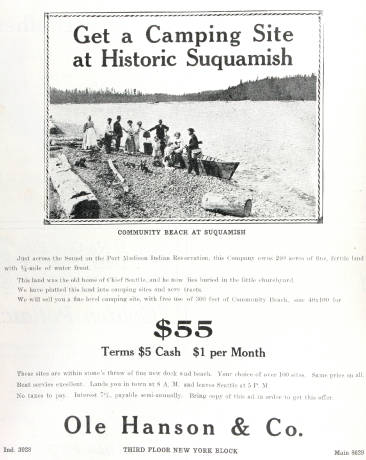
An old advertisement that appeared in the Seattle Star, offering cheap land on the Port Madison Indian Reservation. For more information on the Allotment & Assimilation Era click here. For more information on the early 20th century history of the town of Suquamish click here.

Jones is seeking additional information about the building from the community and encourages the public to submit any photos or stories about the property to her office by contacting her at mjones@suquamish.nsn.us

PME’s purchase of the property, and several others in the downtown Suquamish area over the last decade, is part of the Suquamish Tribe’s “Buy Back the Reservation” initiative. With help from a combination of funds, including profits from Tribally-owned businesses, the Suquamish Tribe has been able to purchase individual properties back from private owners.

In 2015, the Reservation Buy Back Initiative reached a new milestone when the Tribe negotiated the purchase of a 220-acre parcel of land at the headwaters of Cowling Creek. The acquisition, coupled with properties owned by the Tribal Government and those owned by individual Tribal members, meant that the Suquamish owned more than half the properties within reservation boundaries for the first time in more than half a century. The Suquamish Tribal Government continues to make the initiative a priority and sets aside funds for purchases when available each year.

Holiday Tree Lighting

What brings us together as a community?  Sharing the fun and festivities of the holidays?  Sharing our love of children and family?  Sharing our love of traditions? Sharing a reason to celebrate hope and joy with music?

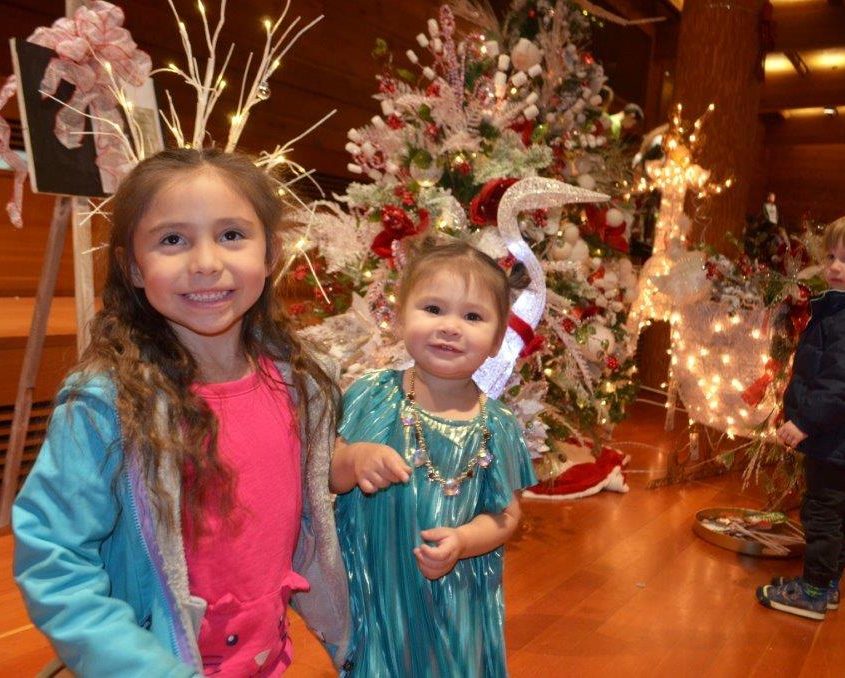
All these things merged and created a beautiful sense of community in the first Suquamish Community Holiday Tree Lighting on December 7th at the House of Awakened Culture as over 400 community attendees celebrated the start of the Christmas season together.  The Suquamish Foundation, the non-profit arm of the Suquamish Tribe, hosted the event as a way to thank the community for its generosity and build a new tradition we can share as a community. The beautifully decorated House had over 1,000 sparkling lights that joined with the clear winter night’s sky full of stars.  Indoors, there was a hot coffee bar with cookies, candy canes and marshmallows for everyone.  A Christmas concert was presented by the Kids in Concert, an organization that includes and trains children of all ages that want to learn to play an instrument in a performing orchestra.  Outdoors, the brightly lit Argosy Cruise Christmas Ship kept a date to come close to the shore to serenade us with carols from the water.  At the same time, Suquamish Tribal Chairman, Leonard Forsman, led the countdown to lighting up the tall cedar trees outside the House of Awakened Culture.  A wonderful cheer rose up from the delighted crowd surrounding the luminous trees and viewing the waterfront reflections. 
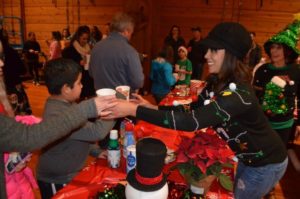
One of the community attendees made a most memorable remark.  She said when the tree was lit and the cheer went up, she turned around and looked at the shining, laughing faces of all the children there with their families and she realized that this was the beginning of a new tradition that these children would remember all their lives and return to with their own children year after year.

In the faces of these children, we could see that they did believe, unwaveringly, in hope and joy.  And beyond that, that they also believe in us, their families, their community, to continue to share our commitment to each other to help, protect and celebrate the health and vibrancy of this precious place we call home.

Suquamish Tribe Responds to DOJ’s Memorandum Regarding Marijuana Enforcement

SUQUAMISH, WA, January 4, 2018- The Suquamish Tribe has enjoyed a productive working relationship with the State of Washington and the United States Department of Justice (DOJ) in our efforts to address the unique challenges faced by Indian Tribes in states that have legalized marijuana for medical, recreational or agricultural uses. After Washington State legalized recreational marijuana, the Suquamish Tribe was forced to address the issue of marijuana regulation in its Indian Country. The tribal-state system we use today was developed over years of cooperative government-to-government work with DOJ, state initiative and legislation, carefully negotiated State-Tribal Compacts and six DOJ guidance memoranda. Despite the existence of this effective and well regulated system, DOJ today elected to rescind all six guidance memoranda without consultation.

“State and Tribal laws were created and crafted in response to the challenges marijuana presented to our communities. We agree with Governor Inslee that the Washington State system addresses these problems in a manner that is well regulated, keeps out criminals, protects it from falling into the hands of children, cracks down on driving under the influence, and carefully tracks production to prevent cross-border transfer,” said Suquamish Tribal Chairman Leonard Forsman.  “The Suquamish Tribe will continue to work closely with Washington State to best protect our people far into the future,” added Forsman.

“This is not only about the marijuana industry, it is about sovereignty, voters rights and access to safe marijuana that since becoming legal has resulted in the creation of good paying jobs and much-needed Tribal tax revenue that allows us to buy our lands back and invest in community development,” said Suquamish Tribal Treasurer Robin Sigo.

About Suquamish Tribe
Suquamish is a federally recognized sovereign Tribe. The village of Suquamish and seat of the Suquamish Tribal Government are located on the Port Madison Indian Reservation, along the shores of the Puget Sound near Seattle, WA. The Suquamish Tribe provides comprehensive government, economic and social programs to approximately 1,100 tribal members. In the last two decades, the Suquamish Tribe has become a key economic partner in the region, operating several Port Madison Enterprises business ventures, a growing seafood company and performing property management duties for lease land on the reservation.


Wrapped in Resilience 2017

In 2005, the Cultural Resurgence Campaign focused on bringing the Suquamish Tribe’s ancestral culture, values and spirituality to the forefront of community life—recognizing their relevance in the present, reawakening Tribal pride in its members, and sharing the Tribe’s history and culture with the greater Suquamish community in Kitsap County.

The inaugural Sovereign Style: Ribbons of Resilience event in October 2016 showcased the artistry of shirts, dresses, and children’s clothes adorned with beautiful ribbons and modelled by Suquamish Tribal members.  Hosted by the Suquamish Foundation, it was the beginning of the Suquamish Sovereign Style campaign celebrating artistry, resilience and generosity.

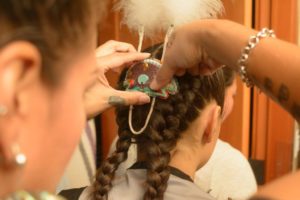
Ribbon shirts and dresses represent many aspects of indigenous history since contact—assimilation, creativity, prayer, ingenuity, tradition, strength, protection, style, and rebellion.  Ribbons were used not only to adorn plain clothing, but to show status, family ties, and preservation of cultural values.  As all cultural activities were outlawed by the U.S. government, ribbon clothing signified a covert resistance to assimilation.

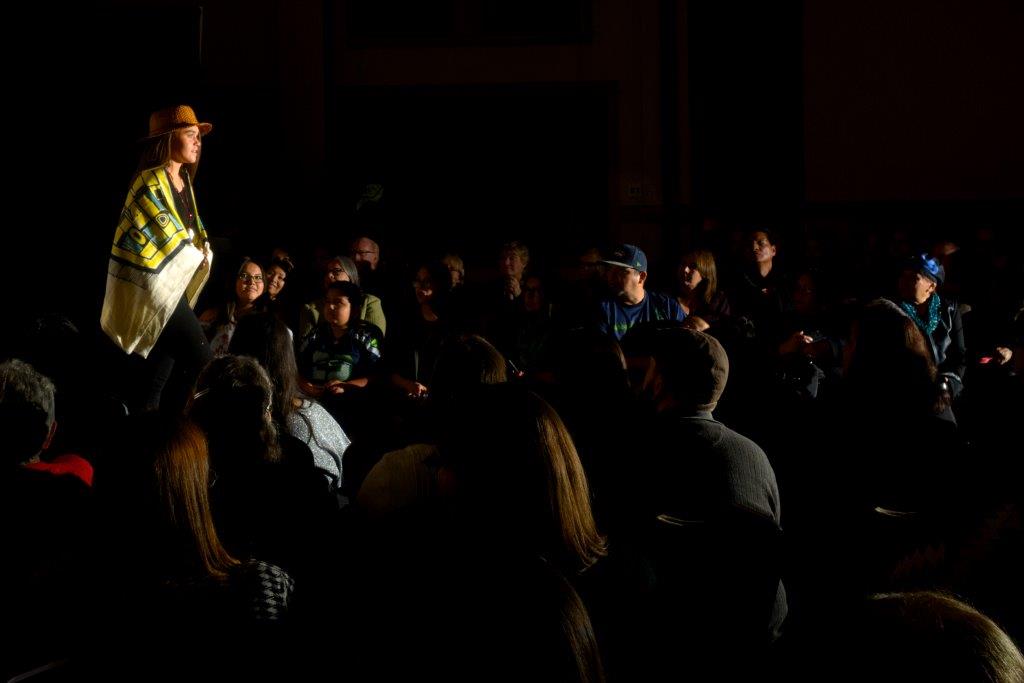
The second event was held again in October 2017 with the theme of “Wrapped in Resilience.” This fashion happening called for shawls, blankets and vests to be exhibited by Suquamish high school student models. Shawls, blankets and vest have been a traditional showcase for Native artistry while serving the practical purpose of keeping a person warm. The exquisite pieces on display ranged from an original woven cedar vest to breathtaking colorful shawls depicting revered Salish characters.  The designs incorporated Native artistry representing traditional craftsmanship and dedication to preserving long-honed skills in a celebration of beautiful garments.

Telling our story through style.  That is the tradition that the Suquamish Foundation Sovereign Style campaign seeks to uphold for the Tribe and the broader, shared community.  It represents the style in which we gift grants, education, and love.  It also represents the need to seek support to further our goal to build resilience for our children and generations to come.
As we reclaim our homeland, we celebrate with pride the ceremonial style that has been an outward sign of our creativity, spirit, prayers, strength, protection and preservation of cultural values, relationships to homeland, and the natural world. By this practice, we enable these traditions and practices to continue on with future generations.

The Suquamish Foundation’s mission is to build on our ancestral vision to enhance the culture, education, environment, and physical well-being of the Tribe and the greater community. It works best when we all are involved as a community of Givers. Sovereign Style allows all of us ways to give with our hands, our heads and our hearts.

The Sovereign Style event in 2018 has been set for October 19th. We hope you join us this year! For more images of the 2017 event, click here.

Suquamish Tribe Chairman Elected ATNI President

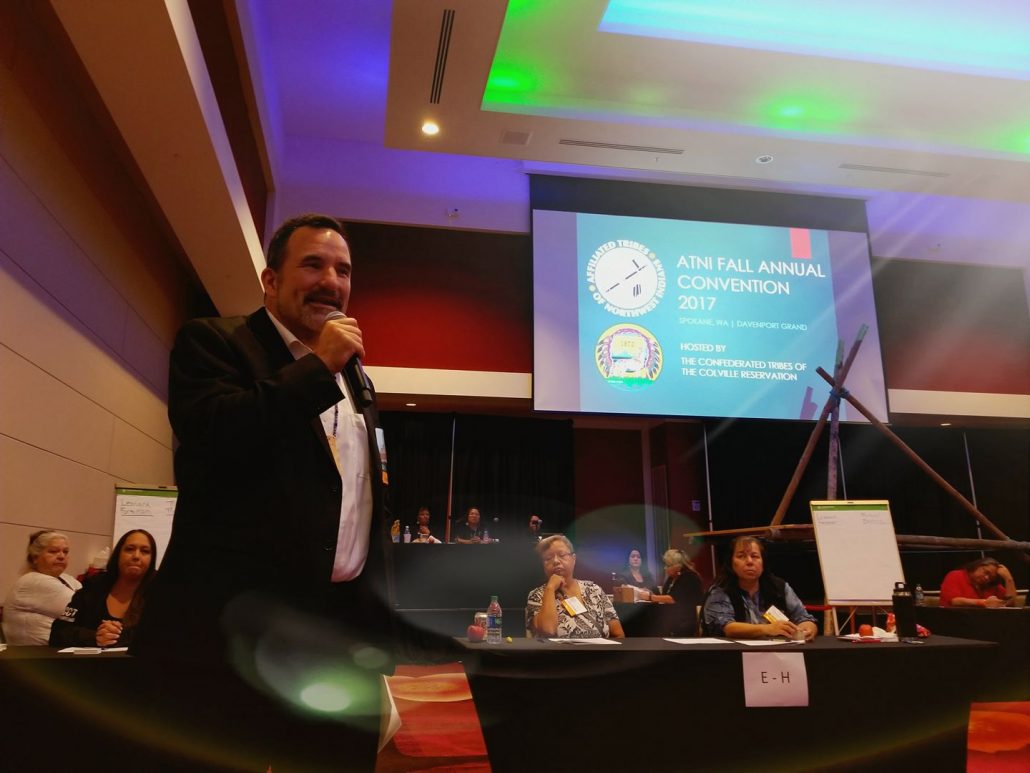
Suquamish Chairman and newly-elected Affiliated Tribes of Northwest Indians (ATNI) President Leonard Forsman addressing attendees at the ATNI Annual Fall Convention in Spokane, WA. Photo by Robin Sigo

SUQUAMISH, WA- The Affiliated Tribes of Northwest Indians (ATNI) Executive Board has a new president. Suquamish Tribal Chairman Leonard Forsman was elected to the position in a close race against fellow ATNI member and Confederated Tribes of the Colville Chairman Mike Marchand.
“I am honored and humbled to be elected ATNI President. ATNI has a legendary reputation as an intertribal organization that is committed to preserving culture, language, fishing and wildlife habitat, and healthy tribal communities. I look forward to leading our organization in continuing to fulfill its mission to advocate for the tribal rights reserved through treaties, executive orders and other agreements. The Tribes of the Northwest are committed to protecting their homelands and their ancient way of life and I will work hard to help accomplish this sacred duty,” said Forsman.
Forsman was elected September 20, 2017 during the ATNI Fall Annual Convention at The Davenport Grand in Spokane, WA. He replaces President of the Quinault Indian Nation Fawn Sharp, who held the position for 2 terms and did not seek re-election.
“The current climate in Washington D.C. requires us to remain vigilant in our efforts to protect our sovereignty, hunting and fishing rights, health care, education, veterans, sacred places and natural resources from budget cuts and policies and regulatory changes that violate the trust responsibility. We must also work with our allies to protect our housing and economic development programs and initiatives,” added Forsman.
Forsman, a 20-year Tribal Government veteran, is a well-known consensus builder in Indian Country, serving as the Co-chair for the Tribal Leaders Congress on Education, Vice President of the Washington Indian Gaming Association and Vice President of the Federal Advisory Council on Historic Preservation along with several other intergovernmental committees and organizations.
“Leonard is a dear friend and champion not only for the Suquamish Tribe, but for all of Indian Country. I know that he will serve all the Northwest Tribes and will represent our interests across the country. I am grateful for his leadership and look forward to working with him as ATNI President,” said National Congress of American Indian (NCAI) President and Swinomish Tribal Chairman Brian Cladoosby.
The ANTI Executive Board is made up of 7 positions, with elected officers serving staggered 3-year terms. In addition to Forsman, ATNI Member Tribes also re-elected Theresa Sheldon of Tulalip as 2nd Vice President and Taylor Aalvik of Cowlitz as Assistant Secretary this year.
About Leonard Forsman
Leonard Forsman is Chairman of the Suquamish Tribe, a position he has held since 2005. Previously, he was a research archaeologist for Larson Anthropological/Archaeological Services in Seattle, Washington from 1992 to 2003. From 1984 to 1990, he was Director of the Suquamish Museum in Suquamish, WA, and has served on the Museum Board of Directors since 2010. His experience and expertise earned him a federal appointment to the Advisory Council on Historic Preservation, of which he is now vice-chair, where he assists in promoting the preservation, enhancement and productive use of the nation’s historic resources. In addition, Forsman has held the position of Vice President at the Washington Indian Gaming Association since 2005. He has also been a member of the Washington State Historical Society Board since 2007, the Suquamish Tribal Cultural Cooperative Committee since 2006, and the Tribal Leaders Congress on Education since 2005. Forsman received a B.A. in Anthropology from the University of Washington and an M.A. in Historic Preservation from Goucher College.
About ATNI
Formed in 1953, ATNI represents 57 Northwest tribal governments in from Washington, Oregon, Idaho, Northern California, Southeast Alaska and Western Montana. The organization provides a forum for sharing information on matters of interest to its member Tribes allowing them to develop consensus on matters of mutual importance, and assists member Tribes in their governmental and programmatic development consistent with the goals of self-determination and self-sufficiency, and provides for effective public relations and education programs with non-Indian communities. Through its conferences, forums, networks and alliances, it is the intent of ATNI to represent and advocate for the interests of its member Tribes to national Indian and non-Indian organizations and governments. For more information about ATNI or to obtain an agenda of events, visit them online at www.atnitribes.org

KCSO & Suquamish Police Interlocal Agreement

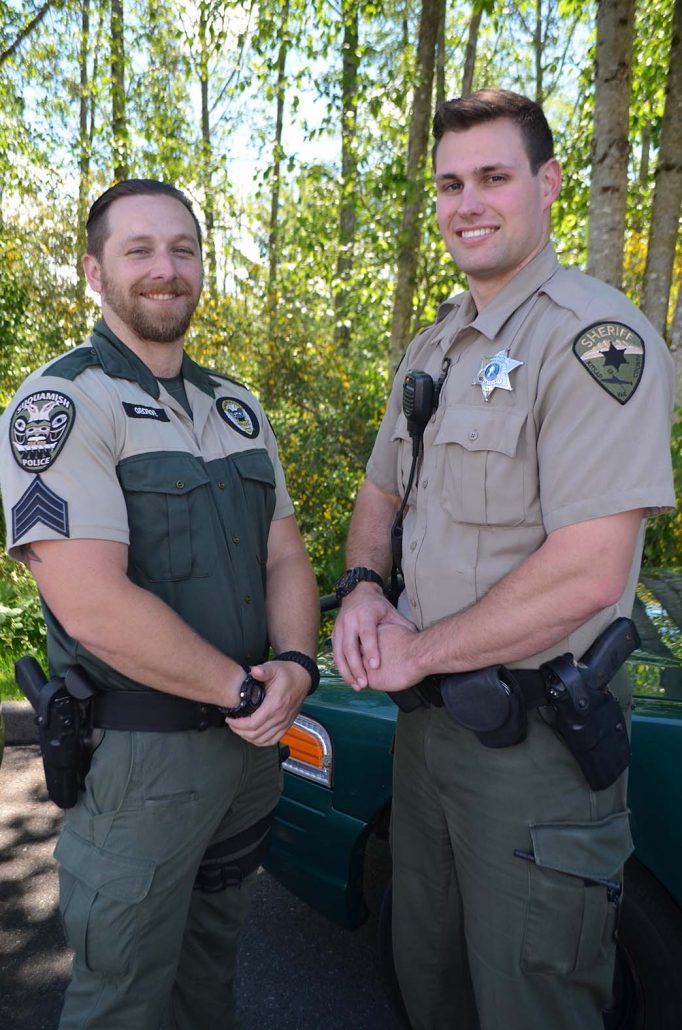
Kitsap County Sheriff Gary Simpson and Suquamish Police Chief Mike Lasnier are pleased to announce that Kitsap County and the Suquamish Tribe have entered into an agreement to provide better and more efficient police services on the Port Madison Reservation. Effective July 1, 2017, Suquamish Police Officers will have state authority to:

  •  issue state citations to non-Indians for state traffic violations on the reservation.
  • pursue non-tribal traffic law violators and fleeing suspects past reservation boundaries.
  • under certain circumstances, arrest non-Indians for state crimes committed on the reservation.

The agreement is part of a new Memorandum of Understanding (MOU) between the Suquamish Tribe and Kitsap County, and fulfills the conditions of a Washington State statute that, upon request, requires county governments to enter into agreements with tribes when they share jurisdiction on an Indian reservation (RCW 10.92). The KCSO and SPD have worked together to provide law enforcement services on the Port Madison reservation for many years. However, depending on the type of land ownership and the Indian status of individuals, the rules for jurisdiction changed for each agency.

KCSO Lt. Jeffrey Menge pointed out that prior to the MOU a tribal officer had (and still has) the right to detain any person suspected of a crime and could investigate any crime on the reservation but they could not make any formal arrests or transports under state law. This will now change. An example of this new collaboration can be illustrated with a common DUI Investigation. In the past, a tribal officer had the ability to stop and detain a person suspected of DUI on the reservation but once they determined the suspect was “non-Indian”, the officer was required to stop and wait for a KCSO Deputy or State Trooper to respond and finish the investigation. Under the MOU, the Suquamish officer can now complete the entire investigation under state authority, including arrest and transport to the jail, thus eliminating the need to tie up other officers and duplicate efforts.

The Suquamish Police Department includes a Marine Division, that also coordinates with Kitsap County Sheriff Deputies.

“It doesn’t take two cops to do the work of one cop. Tribal officers and citizens have been stuck on the side of the road awaiting the arrival of a Deputy, who in many cases was pulled away from a more serious investigation to come handle a minor offense. It gets worse; two officers now have to write reports, receive subpoenas and will have to go to court at substantial cost to two different governments. These are low level cases; traffic violations and misdemeanor property crimes. We want our deputies out there catching burglars and heroin dealers, not driving 20 minutes to write a suspended driver a citation we could have issued in 90 seconds,” said Suquamish Police Chief Mike Lasnier.

Sheriff Gary Simpson credits a good working relationship between Kitsap County and the Suquamish Tribe for making the MOU a reality. “Our already collaborative and cooperative working relationship made this process as easy as it could have been, given its complexity.” Simpson said, “In many ways, this agreement memorializes an already fantastic working relationship.”
Sheriff Simpson added that the end result of the complex process is “a more effective and efficient public safety response for all citizens on the Port Madison Reservation and surrounding communities.”

Kitsap County Sherriff will be hosting an open house for those who want to know more at 5:30 p.m. on June 22, 2017 at the Suquamish United Church of Christ, 18732 Division Ave. NE, Suquamish, WA 98392.  For more information on the interlocal agreement, check out our Suquamish Police Frequently Asked Questions Page or download a printable brochure by clicking here.