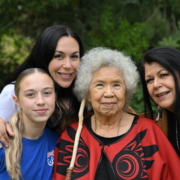

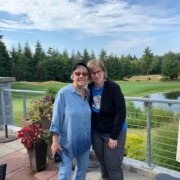
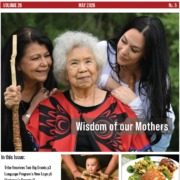
Suquamish tribal member Patty Vollenweider was working at medical clinic in Northern California when she learned that a client had died while sleeping in a nearby public park. His Social Security benefits had been mismanaged by his payee, the person who was supposed to be helping pay his bills. That mismanagement left the man without the resources he needed to survive.
That was in the early 1990s and the moment stayed with Vollenweider. And it clarified a calling.
Not long after, she founded what is now known as Community Engaged Payee Support, or CEPS, built on a simple idea: people deserve to access their own money with dignity, safety, and trust.
What began as one woman’s response to injustice has grown into a non-profit organization that now serves thousands of people each month across the Sacramento area, including elders, people with disabilities, and veterans.
CEPS aids individuals who have difficulty managing their day-to-day financial affairs. Services are designed to meet each client’s individual money management needs, while serving as their representative payee. This includes establishing and maintaining a monthly budget, paying monthly bills, creating savings goals, organization and keeping track of financial records, negotiating with creditors, and protecting them from financial fraud, abuse, or exploitation.
Managing millions of dollars in payee funds and donations, CEPS helps clients maintain stability while also connecting them to housing, behavioral health services, and recovery support.
But for Vollenweider, the work was never just about building better support systems. It was always grounded in finding better ways to care for the people who need them.
Radical simplicity
“Her work was radical in its simplicity,” says her daughter Jasmine Vollenweider. “Meet people where they are, love them as they are, and believe in who they could become.”
That philosophy was shaped by lived experience, a single mother raising two daughters while relying on public benefits. She also carried decades of sobriety, with experiences that grounded her approach in empathy rather than judgment.
“She knew firsthand how fragile stability can be,” Jasmine says.
Vollenweider also carried Suquamish cultural teachings that emphasized community, connection, and responsibility to others. “She was a proud Suquamish Elder, carrying forward the wisdom and responsibility of a lineage rooted in the teachings of Chief Seattle. Her Indigenous identity was not something she spoke about loudly — but it lived quietly and powerfully in how she showed up in the world. She believed deeply in community, in interconnectedness, and in honoring each person’s spirit.”
That belief guided how she built CEPS. The organization expanded beyond financial management to include housing support, mental health advocacy, and recovery services, becoming a trusted resource for people navigating some of life’s hardest moments.
It also shaped how she treated people in everyday encounters.
Jasmine recalls a moment when her mother stopped to speak with a veteran holding a sign on an offramp. Simply listening to his story led to a connection with VA services. The man eventually found stable housing, remarried, and rebuilt his life.
“She reminded all of us — staff, clients, and partners — that focusing on the good is not naïve; it’s necessary,” says Jasmine.
A lasting legacy
Vollenweider passed away Dec. 6, 2025, at the age of 71.
In the months since, her daughter has stepped forward to carry on the work her mother began more than 30 years ago.
“I’ve had the privilege of learning from the very best,” says Jasmine. “Since the inception of CEPS, I’ve walked beside my mother—not just as her daughter, but as her student.”
Now helping to lead the non-profit, she continues the work grounded in the same values her mother instilled — caring for both clients and staff, removing barriers where possible, and staying focused on doing what is right.
Through CEPS, Patty Vollenweider’s work continues.
“Her impact will ripple outward for generations,” says Jasmine. “In every door opened to stability, every moment of dignity restored, every person who walks through our doors and finds not judgment, but hope.”
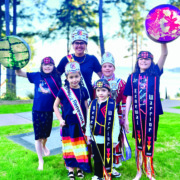
The Renewal Coastal Jam & Powwow, held April 24–26, drew large crowds this year and marked a major transition as the powwow portion moved from its longtime home at the House of Awakened Culture to the Clearwater Casino Resort.
For years, the full event — including both the Coastal Jam and powwow — has been held at the House of Awakened Culture. But steady growth in attendance has pushed the gathering beyond the capacity of the community space.
“We just outgrew that building,” said Bearon Old Coyote, who has helped his father James Old Coyote organize the event in recent years.
This year, the event opened Friday evening with the Coastal Jam at the House of Awakened Culture, where canoe families from across the region filled the floor with song and dance.
By Saturday, the powwow portion shifted to the casino’s convention center, providing more room for dancers, spectators, and vendors. The Renewal Coastal Jam & Powwow traces its roots back decades. The Renewal Weekend was first conceived by James’ father, the late Steve Old Coyote decades ago, and now continues as family tradition celebrating the sobriety and new beginnings.
“Renewal – it’s springtime. That’s the time for change, that’s the time for renewal,” Old Coyote said. “And at the same time, it’s a celebration for sobriety — those who choose to walk that Red Road.”
The powwow blends competitive dancing with cultural celebration, creating space for community members to gather, reconnect and honor those in recovery.
“It’s one that we all look forward to every year,” Old Coyote said. “The community just gets bigger and bigger.”
Alongside the dancing, the Renewal Powwow Royalty Pageant highlighted the next generation of young leaders.
This year’s pageant featured a dozen contestants, one of the largest groups in recent memory.
“We do this because being a part of our royalty and representing the Suquamish Tribe and the powwow that we’re a part of is really important for the growth of our youth,” said pageant organizer Kali Chargualaf. “The responsibilities they get to experience and learning about the tribe and the powwow they represent — it’s important work.” Royalty serve as ambassadors throughout the year, representing the community at events, conferences and gatherings.
“They get to play a leadership role when they attend these events and wear their sash,” Chargualaf said.
“There’s many different people from different tribes in here,” she said. “They’re representing their tribes and their families too.”
After more than an hour of interviews, a three-judge panel deliberated before selecting this year’s winners.
2026-27 Renewal Royalty Winners:
Chargualaf said the strong turnout reflects growing visibility and pride in the event.
“I actually love it,” she said. “I love that there’s a lot more visibility with the Renewal Powwow and that people are wanting to represent this powwow and wanting to represent themselves, their tribes and their families.”
Chargualaf also offered special thanks to the talented artists who created this year’s royalty regalia including:
Outgoing royalty were also recognized during the pageant, offering thanks to the family members, mentors and community who supported them throughout their year of service.
From a packed Coastal Jam to an expanded powwow stage, this year’s Renewal Coastal Jam & Powwow reflected both growth and continuity, honoring culture, celebrating sobriety and marking the seasonal shift into spring.
“We go from darkness into light,” Chargualaf said.
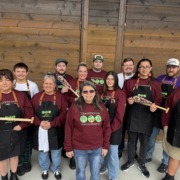

BY: Cassy George, Suquamish Language Program Coordinator
The Suquamish Language Program’s mission statement is to revitalize the Suquamish dialect of the txʷəlšucid language within the Suquamish tribal community. txʷəl ʔiɫlaq ɫuʔaciɫtalbixʷ. For the future generations to come, or literally: the people coming from behind.” This is an important concept to illustrate with the program logo, because it differs so much from the English world. In Lushootseed, the future generations are coming from behind us. In English, the future is in front of us. The Lushootseed perspective puts more responsibility on the people in the present to consider what they are leaving behind for the next people to access. It shifts the focus from individual goals to collective responsibility to maintain the connection between Suquamish people and Suquamish language.
Our previous logo carried us far, but it was time for a change in our methodology and focus on development. We must remember that everything we do is for future generations, and this is represented in the new logo.
The logo design was developed in consultation between the Language Program and Suquamish Tribal Member and artist, Diana Riggins. Along with clearly capturing the urgency of language revitalization, it was important to create a logo that could easily be recognized and applied to a wide range of uses – from business cards, to posters, to digital platforms, and more.
Encircling the new design is a fishnet pattern, representing the cultural and practical traditions tied to the water and the various ways the Suquamish people are reconnecting to their language. Lushootseed Revitalizationist Shayna Bagley has strategically provided Lushootseed lessons on the beach, on the water, and during clam bakes on The Slab to strengthen this connection.
Inside the logo’s border is the traditional shape of an ʔəʔutx̌s ( sea going canoe), reinforcing a recognizable Suquamish presence. The paddlers are shown with their paddles raised, a symbol of respect and unity, and communicates the collective commitment required to carry the language forward.
Serving as the anchor of the design is an Elder speaking the language. The language itself is depicted as flowing swirls moving from the Elder to the generations of youth behind her. This design element represents the important role of language teachers such as Brandy Boure, Calina Lawrence, and Joey Holmes. Brandy is a Lushootseed teacher at Chief Kitsap Academy and breathes life into the language with tribal youth. Calina brings Lushootseed into all aspects of her life with her family, friends, and community. Joey speaks Lushootseed with his wife Denita Holmes and their children. They are one of very few tribal households where Lushootseed is used by both parents in varying capacities.
I am proud of how intentional we were with the design of the new logo. Our Language Program has a lot more work to do, and this logo will help carry us there and help remind us that language revitalization is not a single moment, but an ongoing passage from one generation to the next.
Summer Lushootseed Protocol Classes
DATES: Tuesdays from June 23 – July 21 (five weeks)
TIMES: TBD
WHERE: Classes will be offered in person at ʔiišədalʔtxʷ Family and Friends Center and online via Zoom.
WHAT: Each class will teach the same protocols. Come to as many as you need to feel confident speaking on Canoe Journey and other tribal gatherings this summer! Classes will include protocol language for:
Additional class details will be shared in the Weekly Update.
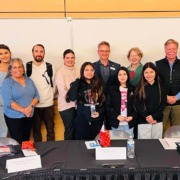
Suquamish youth joined peers from across the county at the 2026 Kitsap Youth Forum on March 19 at Olympic College in Bremerton, taking part in discussions with local leaders on issues affecting young people.
The annual forum provides a free space for youth and young adults to engage directly with decision-makers, share concerns, and learn more about local policy and community issues.
Attending from the Suquamish community were Nardine and Narmine Ridani, Genevieve Boure, Teylor and Charlotte Ives, and DeSean Santos. The group was accompanied by Family & Friends Center Director Barb Santos and Activity Coordinator Ryan Boure.
The forum created opportunities for youth to ask questions of elected officials, while also answering leaders’ questions in return, creating a two-way dialogue. Suquamish participants were especially engaged in discussions about youth homelessness, mental health, and safety.
“The youth came ready with thoughtful questions and a real desire to understand what resources are available and how systems are working to support them,” Santos said. “They were especially interested in how communities are responding to youth homelessness and making sure young people feel safe and supported.”
Tribal Council Vice Treasurer Josh Bagley participated as a panelist alongside other Kitsap County leaders, answering questions and sharing information about services available to tribal members and the broader community.
“Our youth were encouraged to hear that outreach teams are actively checking on people experiencing homelessness and helping connect them with services,” Santos said. “They also appreciated learning about counseling and family support programs that are helping bridge gaps for young people and their families.”
The forum reinforced the importance of youth voices in shaping community conversations and solutions.
“The biggest takeaway is that their voices matter,” Santos said. “They asked important questions, listened closely, and came away with a better understanding of both the challenges and the support systems that are out there.”
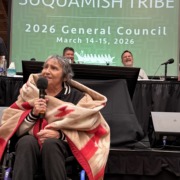
During the General Council gathering at Kiana Lodge, the Suquamish Tribe honored former Tribal Council Chair Georgia George in a ceremony recognizing her decades of leadership and service.
George was wrapped in a blanket by Calina Lawrence and Serene George as members of the General Council assembly looked on, many rising in support as the tribute unfolded.
Introducing the honor, Cultural Resources staffer Joey Holmes reflected on a time when the tribe operated with far fewer resources, recalling that George often traveled alone while representing her people.
“She was a major lobbyist and helped get the Rafeedie case across the finish line to establish treaty shell fishing rights. She did so much, she was awarded Person of the Year alongside Wilma Mankiller,” 30 years ago at the National Congress of American Indians conference, said Holmes.
In her remarks, George blended her trademark feisty humor with wise reflection. “It makes me feel old when I look at some of the existing Tribal Council members and know that I served with their mom and dad,” she said.
She spoke about the tribe’s growth over the decades, saying she has never seen the tribal community as “healthy, happy, and rich” as it is today, with strong cultural traditions, education systems, and health services in place.
“We couldn’t have done it without good leadership, without good community and tribal support, and without good employees,” she said.
George emphasized unity and the importance of continuing to dream and build together as a community.
“We can all achieve great things together as a tribe,” she said. “I have no regrets. I wouldn’t take back a minute of it.”
She also offered advice to future leaders.
“Stand up,” she said, “but always keep your humble roots.”
Grounding that message in culture, she encouraged younger generations to stay connected to tradition.
“Remember how to open up oysters and eat a raw clam,” she said. “Remember how to smoke some fish and eat the fish — especially the fish head!
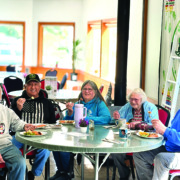
On a recent morning at the Elders Kitchen, the lunch plan changed on the fly.
Tamale pie was on the menu. Ground meat was already sizzling. Then the crew realized they were short on cornmeal.
No drama followed.
Head Cook Marie Sanders announced they needed to adjust the plan. Johnathan Old Coyote Bagley suggested enchilada casseroles. Pivot made. Assistant Cook Kathy Pondelick kept moving on her kale salad. Nearby, Bagley’s young daughter, Alice, colored with crayons at her own little table and got ready for one of her favorite jobs — helping her dad pack milk for the lunch deliveries.
It was a small moment, but it said a lot about how the kitchen works.
People step in. Plans shift. The work gets done. And more often than not, it happens with family close at hand.
That spirit has helped carry the Elders Kitchen into a new chapter since the retirement of longtime head cook Eanie Abler, whose years of service helped make the program a beloved part of community life.
Today, the kitchen is evolving under Ablers’ two daughters Sanders and Pondelick, as well as assistant cook and delivery driver Old Coyote-Bagley. Nina Old Coyote, who supervises the kitchen staff as part of her broader work overseeing the social services team, is also regularly in the kitchen helping where needed.
Hearts of service Human Services
Director Nehreen Ayub said that kind of teamwork is at the heart of the program.
“They just come and want to serve the Elders,” Ayub said. “They want to provide a nurturing, warm meal, and they do it with so much love.”
Ayub said the team has also helped breathe new life into the dining room itself.
“There’s a different vibe to it now,” she said. “We’ve already seen more Elders come because it feels fresh.”
That sense of welcome runs deep here.
Sanders is no stranger to the kitchen. She first began helping her mother there in 1999, shortly after moving back to Washington with her children. Over the years, she worked as a back-up cook while Abler became closely identified with the kitchen and its meals.
Now, with her mother retired, Sanders has stepped into the lead role herself. Her sister, Pondelick, has also worked in and around the kitchen over the years and has now been there full time for six years.
“We just found that groove,” Pondelick said with a laugh.
That groove seems to be paying off.
Secret Recipes
Indeed, the lunch program has seen a noticeable increase in participation in recent months. Where the kitchen once might have served a small handful of dine-in eaters on top of meals sent out for delivery for homebound Elders, Sanders said these days it’s not uncommon to see more than 30 eager Elders coming into enjoy a meal.
And not just Elders. The dining room is open to anyone in the community.
The price helps too. Meals are free for Elders 55 years old and up. For everyone else, it’s $5 a plate. It’s easy to see why Elders Kitchen is considered one of the best lunch deals around. But price is only part of the appeal.
“Our secret recipe is our team. We have fun, we do team building days, work on art together,” said Sanders. “We enjoy each other and we put that love into our food. And it shows.”
The dining room itself is also undergoing evolution.
The buffet line, once tucked away in the middle storage area, has been moved into the lunchroom itself. That shift has made the space feel less like a back-room pickup point and more like a shared meal.
Tablecloths now cover the tables. Artwork brightens the room. Affirmation cards and small touches from home give the space warmth. There is a puzzle table, monthly raffle prizes, and plans for a sitting area once an old piano is removed.
Moving the buffet into the dining space helped change the flow of the room — something Sanders said even comes down to feel. “It just has better feng shui,” she said, laughing. “It feels more like a family-style dining space.”
Nina Old Coyote has been part of that effort too, helping shape the room’s atmosphere and stepping into the kitchen as needed. She said she tries to pitch in regularly, whether that means helping pack meals, giving the crew an extra set of hands chopping fresh veggies, or whatever it takes.
Ayub said the changes have been driven in part by Old Coyote and Sanders working together to update the space and make it feel more inviting.
“I feel like I see their passion in all these recent upgrades,” Ayub said.
Some of the changes are practical. Others are about attitude.
Waking the kitchen
Each day begins with what the staff calls “waking up the kitchen” — turning on the dishwasher, ovens and warmers, readying the workstations, and finally taking a deep breath before the day begins.
“We just take a deep breath and focus on work and leave the rest at home,” Pondelick said. “Do one thing at a time, focus on that. And before you know it, you’re feeling good.”
“It’s all about bringing good energy,” Pondelick said. “I’ve always heard not to cook or make food with an angry heart.”
The work itself is divided in a way that plays to each person’s strengths. Sanders handles the main dish. Pondelick makes salads and dressings. Old Coyote-Bagley has become the kitchen’s baker, turning out cornbread, cookies, cakes and biscuits with what Sanders called an effortless touch.
Then there is little Miss Alice.
She comes in several mornings each week, colors at her little table, counts bowls and helps pack milk for the delivery route.
“We have raised up several kids in the kitchen,” Sanders said. The family connections go even further.
Abler’s recipes still live in the kitchen’s well-worn recipe box and folders, alongside handwritten notes from other cooks and helpers who have shaped the meals over the years. Old Coyote-Bagley’s grandmother once worked there as a baker. He credits her influence on what Sanders describes as his “magic touch” as a baker.
“All of us have our families intertwined in this kitchen,” Sanders said. That sense of continuity matters, especially during a time of change.
No one in the kitchen speaks of replacing Abler. Her influence is still there in the recipes, in the room and in the habits the team continues. One corner still holds the puzzle table she loved. The kitchen still serves longtime favorites tied to her name.
But the next chapter is taking shape too.
Ayub said the team’s work can be easy to overlook, even though it matters deeply to the people it serves.
“That whole crew is amazing, but they are all-too-often unsung heroes,” she said. “It’s easy to miss because it happens behind the scenes, but the work they do really matters.”
In the Elders Kitchen, that work looks like lunch.
But it also looks like family, care, memory, and the daily, diligent effort of making people feel welcome when they walk through the door to enjoy something delicious.
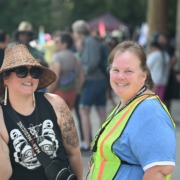
Within the Suquamish Tribe, our gatherings — like Canoe Journey, Chief Seattle Days, the Renewal Powwow, and other seasonal celebrations — are more than just events. They’re a time for our community to come together, connect, and celebrate our culture and traditions. Behind the scenes, it takes a lot of teamwork to make these events safe and enjoyable for everyone. That’s where Emergency Management comes in — we help bring departments together and coordinate efforts so the community can focus on enjoying the event. We do this by creating a clear structure for planning and coordination, giving everyone a system to work within so things stay organized and run smoothly.
When we host large events, there are more people, more traffic, and a lot of moving pieces. Planning ahead and working together is what helps everything run as smoothly as possible.
Emergency Management supports this by coordinating resources, making sure the right people and equipment are in place, and keeping communication flowing between departments and with the community. We also plan for things like medical situations, severe weather, crowd movement, and other unexpected issues that can come up.
By working closely with other departments, we help reduce confusion and redundancy, and make sure everyone knows their role if something happens. Our cultural and community events don’t happen on their own — they’re made possible through strong partnerships.
Among just a few of the departments Emergency Management works close with:
Each department brings important knowledge and experience, and together we build a plan that supports both safety and a successful event. One of the main tools we create is an Event Action Plan, which helps everyone stay organized and prepared. These plans outline roles and responsibilities, how we communicate, what to do in an emergency, site layouts, and key contacts so teams can quickly connect and respond if needed.
This teamwork doesn’t just stay on paper — it happens in real time at every event. Whether it’s managing traffic, supporting facilities, or working through an unexpected issue, departments are working side-by-side the entire time. Things don’t always go perfectly, and that’s okay. Because we have strong relationships and clear plans in place, we’re able to quickly work through any challenges together using communication and teamwork.
The success of our events reflects the strength of these partnerships and the dedication of the departments. When departments plan together, communicate clearly, and support one another, we create safer and more enjoyable experiences for everyone.
Emergency Management is proud to work alongside our tribal partners — because when we plan together, we protect what matters most: our people, our culture, and our community.